Why Video Editing Is One of the Best Remote Skills for Moms in 2026
If you’re a mom who wants to earn from home — during nap time, school drop-off, or late nights — video editing might be the perfect skill. It’s creative, flexible, and one of the most in-demand remote skills right now. And you don’t need a college degree to get started.
The demand for video content is exploding. Brands, YouTubers, realtors, wedding couples, and small businesses all need editors — and they’re willing to pay. According to the U.S. Bureau of Labor Statistics, the median annual wage for film and video editors is about $62,420 per year, and freelancers can earn even more.
Here’s the real advantage: you set your own hours. Edit during school hours, nap time, or after bedtime — this is a skill you can genuinely build around your life as a mom, not the other way around.
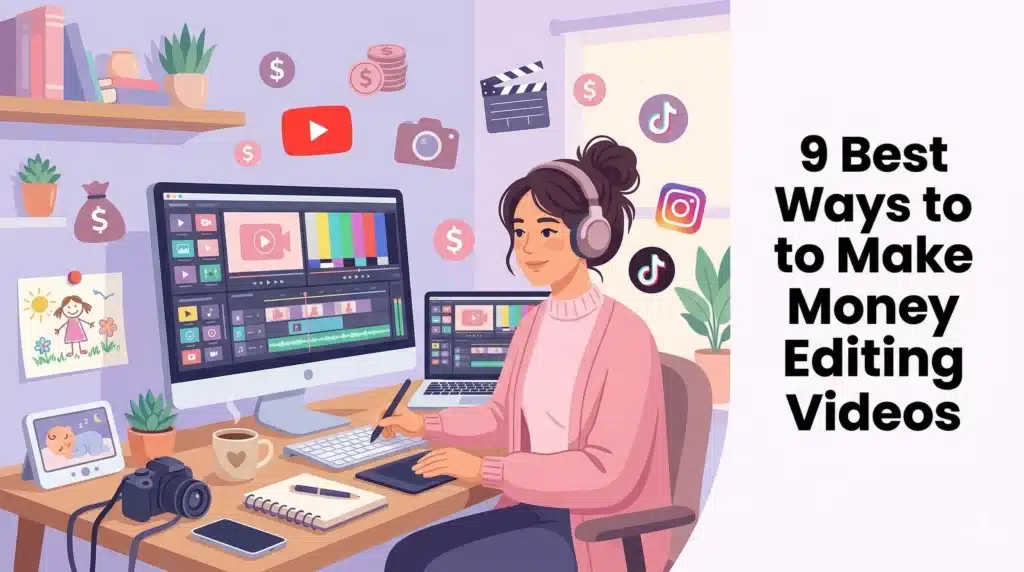
Below are nine realistic paths — from beginner freelancing to passive income — that moms are using right now to turn editing skills into income.
Quick Note: You don’t need expensive gear to start. A mid-range laptop and free software like DaVinci Resolve are enough to land your first paying client.
1. Make Money Editing Videos for YouTubers

This works because YouTubers publish on a weekly schedule and most would rather outsource editing than spend hours learning it themselves.
Every minute, over 500 hours of video are uploaded to YouTube, meaning creators constantly need editors.
Most YouTubers are great on camera but dislike sitting behind the editing timeline. That’s where skilled editors come in.
Editing for YouTubers is one of the fastest ways to build steady retainer income from home. Many creators pay editors $300–$1,500 per month for consistent work. A typical retainer includes four weekly videos, thumbnails, basic cuts, captions, and background music.
How to Find YouTuber Clients
If you don’t have a portfolio yet, start by recreating edits from your favorite YouTubers or editing public domain footage to build 3–4 sample videos.
Then:
- Search YouTube for channels with 5,000–100,000 subscribers
- Reach out using the email in their About tab
- Join Reddit and Facebook creator groups
- Post your services on Fiverr using the keyword “YouTube video editing”
What to Charge
- Beginner: $15–$30/hour
- Intermediate: $35–$60/hour
- Expert: $75–$150+/hour
Quick Action Step: Find one YouTube channel in a niche you love with under 50K subscribers and send them a friendly pitch email this week.
2. Freelance on Platforms Like Upwork, Fiverr, and Contra

This works because these platforms make it easier for clients to find you — no cold outreach required when you’re starting.
Freelancing platforms are one of the easiest ways to land your first paying client, even with zero experience. Thousands of businesses and creators post video editing jobs every day.
If you’re brand new, start with Fiverr to build reviews quickly. After getting 5–10 reviews, move to Upwork for higher-paying clients.
Best Platforms to Start
- Upwork — Long-term clients and corporate work
- Fiverr — Beginner-friendly gig marketplace
- Contra — No platform fees
- PeoplePerHour — UK and European clients
Tips to Land Your First Client
- Upload sample videos to your portfolio
- Offer a discounted first project for reviews
- Write a bio focused on reliability and turnaround time
- Specialize in a niche
Example:
“I edit YouTube videos for fitness coaches” performs better than “I edit videos.”
Quick Action Step: Create a Fiverr gig focused on one niche and upload three portfolio samples.
3. Work With Businesses for Social Media Content

This works because almost every small business needs short-form video but doesn’t have the time or skills to create it.
Nearly every business needs video content for:
- Instagram Reels
- TikTok
- YouTube Shorts
You can package services as a monthly retainer (4–8 videos per month) for $400–$1,500 per client.
Just three clients paying $500/month means $1,500 per month part-time.
Outreach Script to Get Clients
Hi [Name],
I help small businesses turn raw phone footage into polished Instagram Reels. I noticed your page could benefit from short video content. Would you like a free sample edit so you can see what’s possible?
Video Types in Demand
- Instagram Reels
- TikTok clips
- YouTube Shorts
- Email newsletter videos
- Product demos and testimonials
Quick Action Step: Contact five small businesses whose social media lacks video content.
4. Use AI Tools to Edit Faster and Earn More

AI tools are a huge opportunity for beginners in 2026.
They can reduce editing time by 50–70%.
For example, tools like Opus Clip can turn a long podcast into multiple short clips automatically.
Useful AI Video Editing Tools
- CapCut
- Descript
- Runway ML
- Adobe Premiere AI
- Opus Clip
How AI Helps You Earn More
AI can:
- Automatically transcribe video
- Add captions instantly
- Remove filler words
- Repurpose long videos into short clips
Quick Action Step: Practice turning one long video into three short clips.
5. Edit Wedding and Event Videos

Wedding videography is a $4 billion industry in the U.S., and many videographers outsource editing.
A single wedding edit can earn $200–$800.
You don’t attend the wedding. Videographers simply send you raw footage to edit remotely.
Typical Wedding Editing Packages
Basic Package
- 2–3 minute highlight reel
- $150–$300
Standard Package
- Full ceremony plus highlight
- $350–$600
Premium Package
- Full-day edit plus same-day reel
- $700–$1,200
How to Build a Portfolio
- Offer discounted edits for photographers
- Join wedding Facebook groups
- List services on marketplaces
- Message wedding photographers on Instagram
6. Start a YouTube Channel or Course About Video Editing

Teaching video editing can become a scalable income stream.
A YouTube channel can generate money long after you publish videos.
Ways to Monetize
- YouTube AdSense
- Affiliate marketing
- Sponsorships
- Selling online courses
Course platforms include Udemy and Teachable.
Quick Action Step: Write down 10 video ideas about learning editing as a busy parent.
7. Sell Stock Footage, Presets, Templates, and LUTs

Digital products allow you to create something once and sell it unlimited times.
Many editors eventually earn $500–$3,000/month from these assets.
Digital Products You Can Sell
- Stock footage
- LUT color presets
- Transition packs
- Intro templates
- Motion graphics
- Sound effects
Platforms to Sell On
- Motion Array
- Envato Elements
- Pond5
- Etsy
Quick Action Step: Create a pack of 10 LUTs or transitions and list them for sale.
8. Edit Real Estate Listing Videos

Real estate videos are becoming standard for property listings.
Listings with videos receive significantly more engagement.
Most real estate videos are simple edits with music and text overlays.
Editors can charge $100–$400 per listing video.
Why This Niche Works
- New listings appear every week
- Editing style is simple
- Consistent demand
- Fully remote work
How to Find Clients
- Search Zillow listings without videos
- Email real estate agencies
- Join real estate Facebook groups
- Partner with photographers
9. Join a Video Editing Agency or Production Company

If you want stable income, agencies or production companies are a good option.
They handle finding clients while you focus on editing.
Types of Work
Remote Full-Time Job
- Stable salary and benefits
- Less flexibility
Agency Contract
- Flexible schedule
- Income varies
Production Company
- High-quality projects
- Requires stronger skills
Where to Find Remote Editing Jobs
- Remote.co
- LinkedIn Jobs
- We Work Remotely
- Glassdoor
Frequently Asked Questions
Can I earn money from video editing with no experience?
Yes. Many editors start with zero experience by practicing, building a portfolio, and taking small gigs. Tools like CapCut and DaVinci Resolve make learning easy.
How much can freelance video editors make?
Beginners: $500–$1,500/month
Intermediate: $2,000–$5,000/month
Experienced: $6,000–$10,000+/month
What software should I use?
Free options include DaVinci Resolve and CapCut. The industry standard is Adobe Premiere Pro.
Do I need a degree?
No. Video editing is a skills-based industry. A strong portfolio matters more than formal education.
How long does it take to learn video editing?
Most beginners learn the basics in 4–6 weeks with consistent practice.
You’ve Got This
Video editing is one of the most flexible and profitable remote skills you can build.
You can freelance, edit for YouTubers, sell digital products, or find a remote job.
The demand for video editors continues to grow.
Your next step:
Pick one method from this list, create your first sample edit this week, and contact three potential clients.
Small steps lead to big results.