
Can you actually earn real money just by breaking a sweat? Short answer: yes — and more people than ever are doing it.
The global Move-to-Earn fitness app market was valued at $705.4 million in 2025 (Grand View Research) and is projected to hit $2.5 billion by 2034.
That’s a sign this isn’t a passing fad.
Some methods earn you $5–$30 a month passively. Others — like becoming a certified personal trainer — can push your income past $100,000 a year.
This guide covers 15 real, tested ways to get paid to workout — no hype, no gimmicks.
For a broader look at income you can build from home, our side hustles under $100 guide is the next read.
Just honest breakdowns of what each option pays and how to get started today.
What’s Inside
The 3 Categories of Getting Paid to Workout
1. Evidation (Formerly Achievement)
2. Sweatcoin
3. HealthyWage — Bet on Your Own Weight Loss
4. StepBet / WayBetter
5. DietBet — Group Weight Loss Challenges
6. Charity Miles — Get Paid to Give Back
7. Become a Certified Personal Trainer
8. Teach Group Fitness Classes
9. DoorDash on a Bike
10. Dog Walking With Rover or Wag
11. Become a Fitness Content Creator
12. Sports Coaching and Refereeing
13. Paid Fitness Research Studies
14. Amazon Flex or Instacart (Walk-Heavy Routes)
15. Sell Workout Programs or Fitness Coaching Online
The App-Stacking Strategy
FAQ
💡 The 3 Categories of Getting Paid to Workout
Not all 15 options work the same way. Before picking your path, understand the three main categories:
• Reward Apps — Passive income from tracking your daily steps, sleep, or activity. Low effort, low earnings ($5–$30/month). Best as a “set it and forget it” bonus.
• Fitness Jobs & Careers — Become a personal trainer, group fitness instructor, or sports coach. High earning potential ($46K–$100K+/year), but requires certifications and consistent effort.
• Active Side Hustles — Dog walking, bike food delivery, or becoming a fitness content creator. Flexible, scalable, and often fun.
The smartest move? Combine all three. Our guide to active income ideas covers how to layer these streams.
📱 1. Evidation (Formerly Achievement)
The most beginner-friendly fitness reward app — completely passive and risk-free.
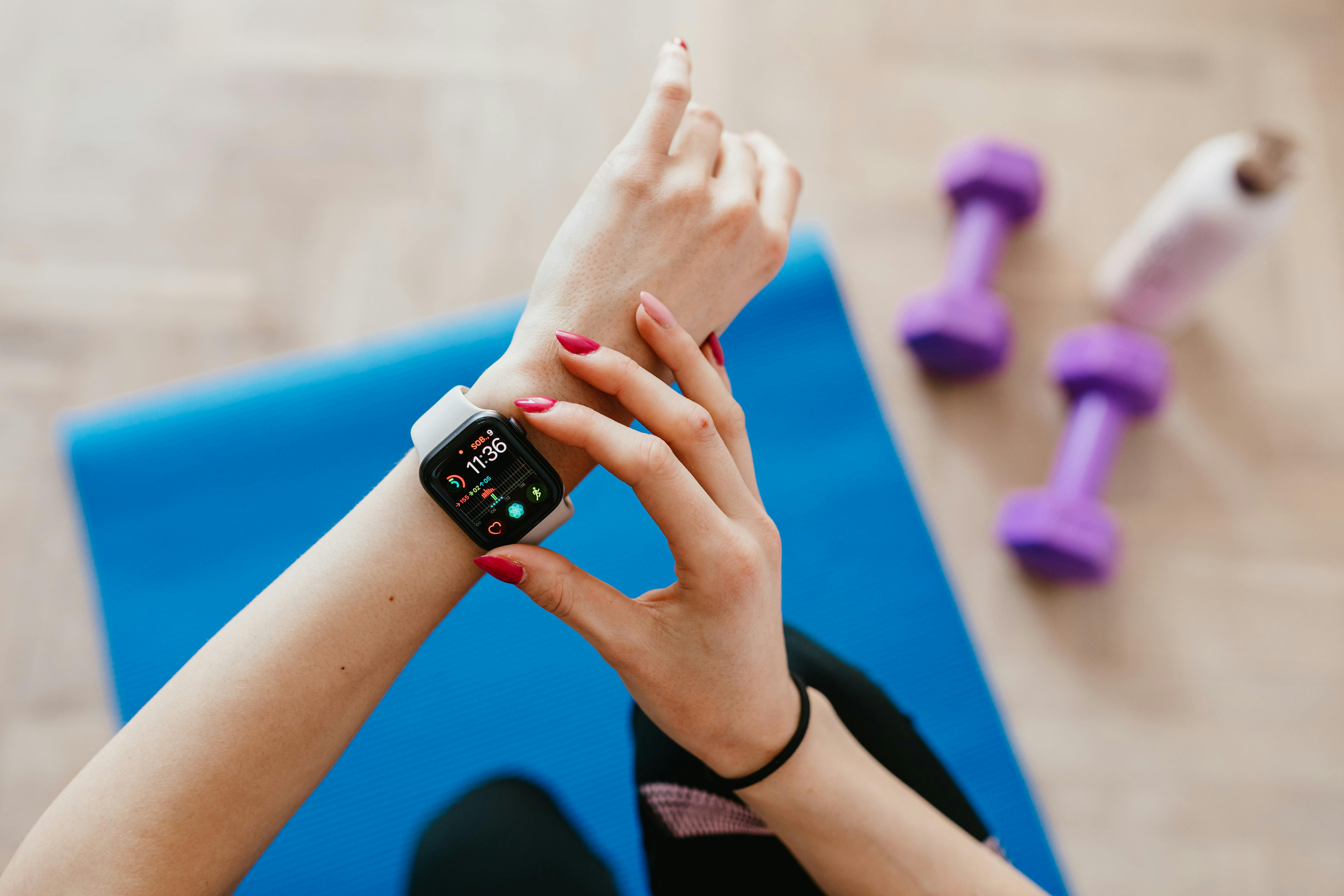
Evidation connects to Fitbit, Apple Health, Garmin, and other wearables, rewarding you for every activity you already do.
The math is simple: 10,000 points = $10, redeemable via PayPal, direct deposit, or gift cards. At 80 points per day maximum, that’s roughly $20–$30 per year in completely passive income.
Pros:
• Links to nearly every major fitness tracker
• Completely passive — just confirm your account and let it run
• No ads, no upsells
Cons:
• Earnings capped at 80 points/day
• Maximum payout of ~$30/year is modest
Best for: People who want a hands-off, no-risk bonus for their existing routine.
👟 2. Sweatcoin
120 million users and counting — the step-tracking app that turns your daily walk into rewards.

Sweatcoin converts every outdoor step you take into Sweatcoins, redeemable for products, gift cards, PayPal cash, or charitable donations. Marketplace redemptions deliver roughly $0.50–$2 per month in value.
The real trick is using Sweatcoin as the foundation of an “app stacking” strategy — run it alongside Evidation and a fitness challenge app, and one morning jog earns you rewards from three platforms at once.
Pros:
• Huge marketplace with diverse redemption options
• No intense workout required — just walking counts
• Stacks well with other reward apps
Cons:
• Cryptocurrency earnings are highly volatile and often near-worthless
• Outdoor steps only (GPS tracked) — indoor steps don’t count
Best for: Daily walkers and commuters who want to monetize steps they’re already taking.
⚖️ 3. HealthyWage — Bet on Your Own Weight Loss
Loss aversion is a stronger motivator than reward — HealthyWage uses that psychology to keep you on track.

HealthyWage motivates you by putting your own money at risk.
You set a weight loss goal, choose a monthly wager ($25–$150), and HealthyWage calculates your potential prize — often $100 to $1,000+.
Hit your goal, verified by a weigh-in video? You win. Miss it? You lose your wager.
Pros:
• One of the highest cash payouts of any fitness app
• Built-in accountability through financial risk
• Transparent prize calculator on their website
Cons:
• You can lose money if you don’t meet your goal
• Requires official verified weigh-ins
Best for: Anyone who’s tried and failed at weight loss goals before and wants a financial accountability tool.
🏆 4. StepBet / WayBetter
Bet on your step count with personalized goals based on your actual history — not generic targets.

StepBet has you join a 6-week game, put up $40, and uses your historical step data to set personalized daily and weekly goals.
Hit every goal? You get your $40 back plus a share of the pot from players who didn’t make it. Average profit sits around $5–$10 per game, and you can stack multiple games to multiply returns.
Pros:
• Personalized goals based on your actual step history — fair, not generic
• Can run multiple games simultaneously to increase earnings
• No-Lose Guarantee protects players who meet all goals
Cons:
• Profit per game is modest ($5–$10 after StepBet’s cut)
• 6-week commitment required per game
Best for: Competitive types who thrive with accountability and a little healthy financial pressure.
👥 5. DietBet — Group Weight Loss Challenges
Community accountability meets financial incentive — lose 4% in 4 weeks and split the pot.

DietBet is the team-based sibling to HealthyWage. You join a challenge, put up a bet ($20–$50 typical), and compete with hundreds of others to lose 4% of your body weight in 4 weeks.
If you hit the goal, all winners split the pot equally.
The real value of DietBet isn’t always the money — it’s the community accountability that solo apps can’t replicate.
Earning Potential by Method (Monthly, 2026)
Earning Potential by Method (Monthly, 2026)
Sources: Grand View Research (2025), dogwalkjobs.com (2025), NASM (2026), app platform data.
Pros:
• Community challenge format adds powerful social motivation
• Low entry bet ($20–$50) makes it accessible
• Professional and celebrity-hosted games with larger pots available
Cons:
• If too many players win, the pot split can result in minimal profit
• Requires consistent effort over 4 weeks
Best for: Social exercisers who need community accountability to stick to fitness goals.
🌍 6. Charity Miles — Get Paid to Give Back
Your workout can fund cancer research, veterans’ organizations, or rainforest preservation — for free.

Charity Miles lets corporate sponsors donate for every mile you walk, run, or bike.
Earning rates are modest — $0.10 per mile for walking/running, $0.25 per mile for cycling — but you’re not keeping the money yourself. Research in behavioral psychology shows purpose-driven activity sustains long-term habit formation better than monetary incentives alone, which is why Charity Miles works best alongside goal-tracking apps.
Pros:
• Zero cost — download and go
• Choose from 40+ major charities
• Works for walking, running, and cycling
Cons:
• No personal financial gain — donations go to charity, not you
• Corporate sponsorship pool is limited
Best for: Mission-driven exercisers who want their fitness to serve a bigger cause.
🏋️ 7. Become a Certified Personal Trainer
The highest-ceiling path on this entire list — 14% job growth projected through 2033 (BLS).

Personal Trainer Income by Career Stage (2026)
Personal Trainer Income by Career Stage (2026)
Sources: U.S. Bureau of Labor Statistics (2026), NASM Salary Report (2026). Hybrid trainers earn the most.
In 2026, the U.S. Bureau of Labor Statistics projects 14% job growth for fitness trainers and instructors through 2033 — nearly double the average for all occupations.
Experienced trainers with specialty certifications and online clients routinely earn $70,000–$100,000+.
According to Gymkee’s 2025 trainer income report, online coaching earns trainers 52% more on average than in-person-only sessions.
How to start:
1. Get certified through NASM, ACE, or ISSA (~$500–$1,000)
2. Build 10–15 in-person clients at a local gym
3. Launch an online coaching program via Trainerize or Kajabi
4. Package signature programs (8-week challenges, nutrition add-ons) for passive income
Best for: Fitness enthusiasts ready to invest in a certification and build a long-term career. Our home business guide covers the online coaching side in detail.
🎤 8. Teach Group Fitness Classes
Lower barrier than personal training — weekend certifications available, $20–$50 per class.

Spin instructors, yoga teachers, Zumba instructors, and HIIT class coaches earn $20–$50 per class at gyms, studios, and community centers.
Most formats offer instructor certifications completable in a weekend for $200–$500. Teaching 8 classes/week at $30 average = $240/week or ~$12,000/year from classes alone — and adding private online classes grows that further.
Pros:
• Weekend certifications available for many formats
• Regular, predictable income once classes are established
• Builds a loyal community that can fuel a personal brand
Cons:
• Early mornings and weekends are peak class times
• Earnings per class are fixed — harder to scale without going online
Best for: Energetic, performance-oriented people who love leading groups and thrive on crowd energy.
🚴 9. DoorDash on a Bike (The Fitness Delivery Hack)
Bike Dashers often out-earn car Dashers — bypassing traffic means more orders per hour.

During peak hours (11 AM–2 PM and 4:30–8 PM), a bike Dasher in an urban area can complete 2–3 orders per hour while a car driver is stuck at red lights.
DoorDash identifies these windows as the most lucrative — bike Dashers earn $20–$25 per hour. In a 6-hour shift, that’s close to $150–$200 while getting a real cardio workout.
Pros:
• Faster route completion = more orders = more pay
• Zero vehicle costs (no gas, no car insurance)
• Flexible hours — work when you want
Cons:
• Earnings heavily dependent on your city’s order volume and density
• Physical demands are high — not sustainable for everyone year-round
Best for: City dwellers who want serious cardio income and don’t own a car.
🐕 10. Dog Walking With Rover or Wag
One of the most underrated fitness side hustles — outdoors, active, and paying $800–$1,500/month.

On Rover, walkers set their own rates and keep 80% of each booking. On Wag, the platform sets rates but provides more on-demand bookings.
A single 30-minute walk earns $15–$25, and building 6–10 regular clients turns this into $800–$1,500/month while logging serious step counts daily.
Full-time walkers in dense urban markets have documented annual earnings above $80,000 with private clients (no platform fees).
Growth tip: Become the “neighborhood specialist.” Offer your first 3 clients a discounted rate, then ask them for referrals. In most neighborhoods, word-of-mouth among pet owners spreads fast — and once you’re trusted, new clients come to you.
Pros:
• Highly flexible — you set your own schedule
• Rover lets you keep 80% of every booking
• Scales from side hustle to full-time income
Cons:
• Wag takes a 40% platform fee (significantly higher than Rover)
• Income depends on your local pet-owner density
Best for: Animal lovers who want flexible, outdoor, active income without needing a certification.
🎬 11. Become a Fitness Content Creator on YouTube or TikTok
The fitness content ecosystem generated $3.4 billion in revenue in 2025 — a slice flows to creators.

According to Business of Apps, the fitness app and content ecosystem generated $3.4 billion in revenue in 2025.
Monetization typically starts 6–12 months into consistent posting. Once established, fitness channels earn through:
• YouTube AdSense — $1–$5 per 1,000 views in the health niche
• Brand sponsorships — $500–$10,000+ per post depending on audience size
• Digital products — workout programs, meal plans, eBooks (high margin, passive income)
• Memberships — Patreon, YouTube channel memberships
Pros:
• Multiple monetization layers once an audience is established
• Your workouts become the content — no extra time investment
• Massive long-term earning potential ($10K–$100K+/month for top creators)
Cons:
• 6–18 months of content creation before meaningful income
• Requires consistency, video editing skills, and content strategy
Best for: Outgoing fitness enthusiasts comfortable on camera who want to build a scalable income stream. See our at-home business ideas guide for complementary strategies.
⚽ 12. Sports Coaching and Refereeing
$15–$40/hr coaching, $25–$75 per game refereeing — certifications take one weekend.

Active Income Methods: Annual Earning Range (2026)
Active Income Methods: Annual Earning Range (2026)
Sources: BLS, NASM, dogwalkjobs.com, DoorDash partner data (2025–2026). Personal training has the highest ceiling; passive apps serve as a low-effort bonus layer.
Youth sports coaching typically pays $15–$40/hour, and refereeing youth and amateur leagues can earn $25–$75 per game.
Getting certified as a referee through USA Soccer, USA Basketball, or similar national governing bodies costs $50–$150 and takes one weekend.
Pros:
• Entry-level certifications are fast and affordable
• High demand for qualified youth coaches and officials year-round
• Often includes benefits like free gym or facility access
Cons:
• Income is seasonal (dependent on league schedules)
• Requires patience working with youth players and parents
Best for: Former athletes or sports enthusiasts who enjoy teaching and working with teams.
🔬 13. Participate in Paid Fitness Research Studies
$50–$2,000+ per study — plus free health screenings worth hundreds of dollars on top.

Universities, hospitals, and pharmaceutical companies regularly recruit healthy adult volunteers for paid exercise and nutrition studies. Short studies pay $50–$200; multi-week clinical trials can pay $500–$2,000+.
Sites like ClinicalTrials.gov, ResearchMatch, and university health department bulletin boards list active studies.
You often also get free DEXA body composition scans, VO2 max testing, and blood panels — worth hundreds in clinical value.
Pros:
• No special skills or certifications required
• Access to premium health testing at no cost
• Studies are IRB-approved and closely monitored for safety
Cons:
• Finding active studies in your area requires ongoing research
• Some studies require specific health profiles or demographics
Best for: Health-conscious adults who want to support science while earning extra cash.
📦 14. Amazon Flex or Instacart (Walk-Heavy Delivery Routes)
Dense urban routes have you walking 3–6 miles per shift while earning $18–$25/hour.

Amazon Flex and Instacart offer delivery routes that function as a paid walking workout.
Dense urban routes have you walking 3–6 miles per shift while earning $18–$25/hour. You’re on foot with packages or grocery bags — it builds leg endurance and burns serious calories.
Pros:
• Flexible scheduling via app — work when you want
• High step count and caloric burn on dense urban routes
• Steady income from established platforms
Cons:
• Not all routes are walk-friendly (suburban routes often require a car)
• Physical toll of carrying heavy packages over long shifts
Best for: Urban residents looking to turn errands into income and exercise simultaneously.
💻 15. Sell Workout Programs or Fitness Coaching Online
The most scalable item on this list — build a program once, sell it forever.

Platforms like Gumroad, Kajabi, and Teachable make it easy to package your fitness knowledge into a product someone buys while you sleep. A well-positioned 8-week strength-training program typically sells for $27–$97.
Sell 10 copies per month and you’re earning $270–$970 from work you completed once. Scale to 100 buyers per month: $2,700–$9,700 from the same program.
The key is a specific niche: “8-week strength plan for women over 40 who hate the gym” outsells “workout program” every single time.
For the full picture on building and selling digital products, our guide to things that sell online covers pricing, platforms, and finding buyers.
Pros:
• True passive income — sell while you sleep
• No limit to how many copies you can sell
• Builds long-term brand equity and recurring audience
Cons:
• Requires upfront time investment to build a quality product
• Marketing and audience building are essential for consistent sales
Best for: Fitness pros, coaches, or enthusiastic amateurs with documented results and a small online following.
📊 How To Maximize Earnings: The App-Stacking Strategy
Walking 8,000+ steps daily? You can earn $50–$80/month by running three apps at once.
Running Evidation, Sweatcoin, and a StepBet challenge concurrently can earn three to four times more than using any single app alone.
The platforms don’t conflict — they each read the same step data from your phone’s health app independently.
Tier 1 (Always-On): Evidation + Sweatcoin — running in the background, zero extra effort
Tier 2 (Monthly Commitment): A StepBet or DietBet challenge — adds $5–$15/month with structured goals
Tier 3 (Active Income): Dog walking, group fitness teaching, or content creation — the real money multiplier
Even if you never become a personal trainer, combining Tier 1 + Tier 2 + Charity Miles turns every existing workout into a triple-reward session.
For a broader framework on building multiple income streams, see our complete side hustle guide.
FAQ
The questions every reader asks — answered honestly.
Can you really get paid just for working out?
Yes, though the amount varies by method. Passive apps like Evidation and Sweatcoin pay $5–$30/month with no extra effort.
Challenge apps like HealthyWage offer $100–$1,000+ prizes, while personal training pays $46,000–$100,000+ annually (BLS, 2026).
What’s the best app to get paid to exercise?
HealthyWage offers the highest payout potential ($100–$1,000+ per challenge) but requires a financial wager and a weight loss goal.
For passive, risk-free income, Evidation is the best starter app — connect your fitness tracker and earn points automatically. Stacking both alongside Sweatcoin maximizes total rewards.
How much can I realistically earn from fitness reward apps per month?
Using a single passive app like Sweatcoin typically yields $1–$2/month in marketplace value. Running three apps simultaneously (Sweatcoin + Evidation + StepBet) while meeting daily goals can yield $40–$80/month.
HealthyWage challenges can add $83+/month when averaged across a prize payout period. Apps work best as supplemental income, not a primary source.
Do I need a certification to get paid to work out?
Only for professional fitness roles like personal training (NASM, ACE, or ISSA) and some group fitness formats. Apps, dog walking, bike delivery, and content creation require no certification. Group fitness certifications for specific formats like Zumba or Les Mills can be completed in a single weekend for $200–$500.
Is HealthyWage legitimate?
Yes. HealthyWage has paid out millions in verified prizes since 2009. Weigh-ins are verified via video submission and prizes are paid by check or PayPal.
The key risk: if you don’t meet your goal by the deadline, you forfeit your monthly wager. Read all terms carefully before betting more than you’re comfortable losing.
Key Takeaways:
• The Move-to-Earn fitness app market hit $705.4 million in 2025 and is projected to nearly triple by 2034.
• Passive tracking apps like Sweatcoin or Evidation pay $5–$30/month with zero extra effort required.
• Fitness careers like personal training have a 14% projected job growth through 2033 (BLS), with top earners surpassing $100K/year.
• “Stacking” multiple reward apps maximizes earnings from a single workout session.
• Online trainers earn 52% more on average than in-person-only instructors (Gymkee, 2025).
Now I’d Like to Hear From You
Getting paid to workout isn’t a gimmick — it’s a spectrum. On one end, passive apps like Evidation and Sweatcoin reward you for steps you’re already taking. On the other, becoming a certified personal trainer or fitness content creator opens a path to six-figure income built entirely around staying active.
Start with the zero-risk apps today. Stack a challenge like StepBet for motivation. Then, if fitness is truly your passion, invest in a certification or begin building your online presence.
Which method are you starting with — passive apps, a fitness challenge, or something more active?
Drop a comment below. I read every single one.