
One pressure washing operator started with a $600 machine and a cell phone.
That story will not repeat itself for everyone who buys a pressure washer. But the underlying pattern does, and that pattern is what this list is really about.
If you are exploring extra ways to earn, grab our free guide featuring 200 Ideas to Generate Extra Income to jump-start your brainstorming.
If you are searching for small business ideas for men in 2026, you have probably scrolled past a hundred lists pushing YouTube automation or dropshipping.
Those paths get crowded fast, and once you add ad spend, platform fees, and customer acquisition costs, the margin can shrink to almost nothing.
The businesses below tend to work better because they combine low startup costs, obvious local demand, repeat customers, and work customers would rather outsource.
That is the filter used to build this list. Every idea here can reach positive cash flow without a big team, a business degree, or outside investors — practical proof of how to start a small business with no money or minimal initial outlay.
Quick answer: The best small businesses in 2026 aren’t flashy online fads. High-margin, low-overhead local service businesses like appliance repair, window cleaning, lawn care, mobile detailing, and pet waste removal offer predictable repeat revenue, low startup friction, and immediate positive cash flow.

Here’s what we’re covering:
- What “making money” actually means here
- Quick comparison table
- 1. Appliance repair
- 2. Window cleaning
- 3. Lawn care and landscaping
- 4. Mobile notary and loan signing agent
- 5. Knife and tool sharpening
- 6. Pressure washing
- 7. Mobile car detailing
- 8. Pet waste removal
- 9. Residential and commercial cleaning
- 10. Junk removal
- 11. Mobile phone screen repair
- Why “boring” businesses win
- How to pick the right one for you
- The real first step
What “Making Money” Actually Means Here
Money-focused lists tend to blur revenue, profit, and margin together, and that blurring makes the numbers sound better than they are.
As outlined in the SBA’s guide to starting a business, keeping clean financial definitions is essential from day one. This post keeps those terms strictly separate:
- Revenue: The total money a business brings in before expenses.
- Profit: What remains after business expenses. When you are the operator, you should also account for the value of your own labor.
- Margin: Profit expressed as a percentage of revenue. It can look impressive in service businesses because labor is often the biggest cost, not because the businesses are free to run.
Keep that distinction in mind as you read the numbers below. Some figures come from individual case studies. Others are industry ranges. Treat them accordingly.
Quick Comparison: Best Small Business Ideas
| Business | Startup Cost | Recurring Revenue | Skill Barrier | Solo Friendly | Scalability |
|---|---|---|---|---|---|
| Appliance repair | $200 to $500 | Low, mostly one-time calls | High, technical skill | Yes | Medium |
| Window cleaning | $200 to $2,000 | Medium, quarterly contracts | Low | Yes | Medium |
| Lawn care | $1,000 to $3,000 | High, weekly/biweekly | Low | Yes | High with crews |
| Mobile notary | $200 to $500 in cert. | Medium, repeat referrals | Medium, licensing | Yes | Low to medium |
| Knife sharpening | $150 to $600 | High, weekly routes | Low to medium | Yes | Medium |
| Pressure washing | $400 to $800 | Low to medium, seasonal | Low | Yes | Medium |
| Mobile detailing | $500 to $1,500 | Medium, maint. plans | Low to medium | Yes | Medium |
| Pet waste removal | $50 to $100 | Very high, weekly plans | Low | Yes | High with routes |
| Cleaning services | $100 to $300 | High, esp. commercial | Low | Yes | High with staff |
| Junk removal | $1,500 to $4,000 | Low, mostly one-time | Low | Yes / crew | Medium |
| Phone screen repair | $300 to $800 | Medium, repeat owners | Medium, technical | Yes | Medium |
Pro Tip: Use this table to shortlist two or three ideas before reading the full sections. Then validate local demand before you spend a single dollar on equipment.
1. Appliance Repair
Best for: People who like hands-on technical problem solving.
People call this the “trunk business,” meaning you can run nearly the entire operation out of your vehicle with no shop or storefront needed.
As appliances get more expensive, more homeowners choose repair over replacement.
In many markets, experienced appliance technicians are becoming harder to replace, which can limit competition.
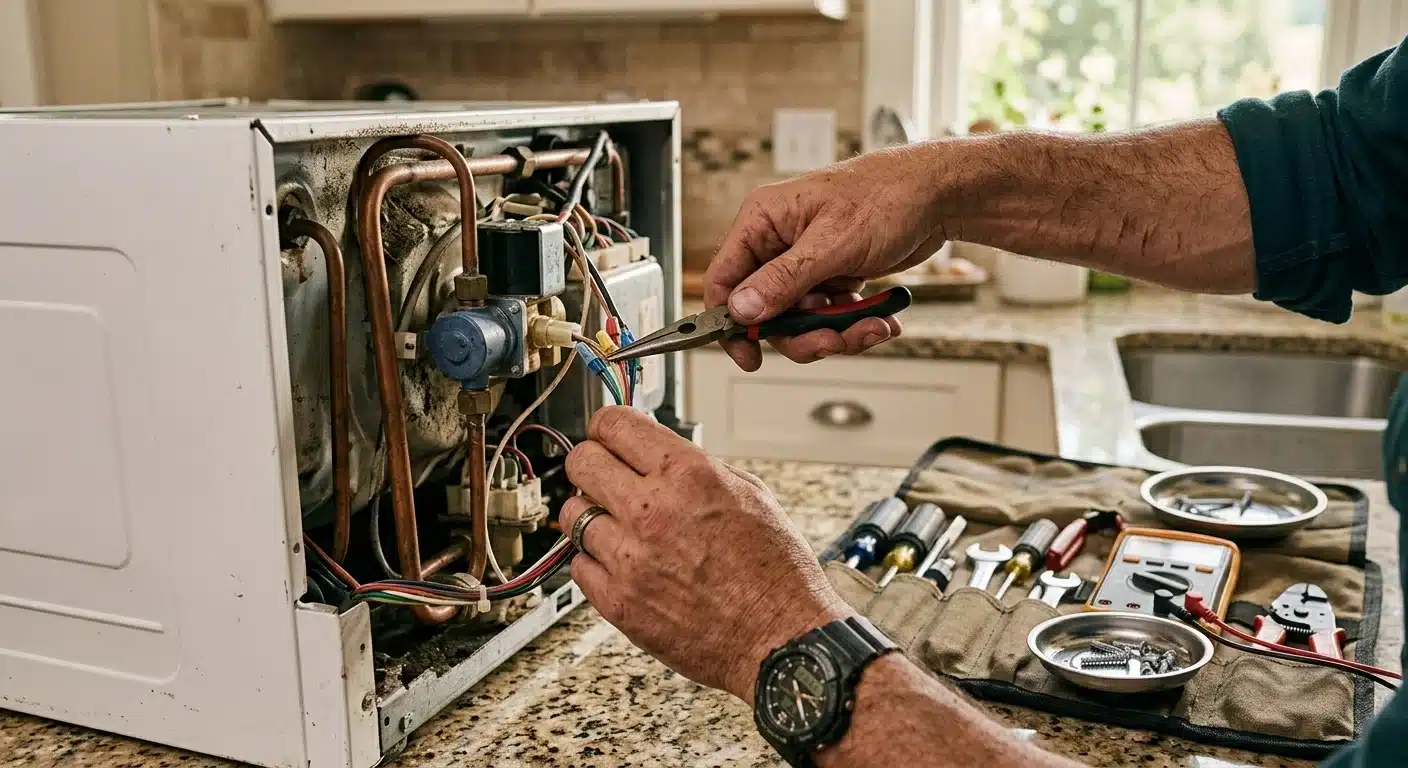
- The numbers: A single call, like replacing a $12 thermal fuse, can bring in $350 in revenue for under an hour of work.
Building a $180,000-a-year business from that same model requires a full schedule, a strong local reputation, and sustained growth, so treat it as a ceiling to work toward rather than a starting point. - Getting your first customers: Start with a Google Business Profile and local community Facebook groups. Your first ten calls should come from friends, neighbors, and referrals before spending on ads.
- The biggest catch: The learning curve. Diagnosing appliances correctly takes real study and safety discipline before you can charge confidently.
Section takeaway: High skill floor, but incredible margins and zero need for retail overhead.
2. Window Cleaning
Best for: People comfortable with heights, consistent cold outreach, and route building.
Commercial buildings with glass frontage almost never clean their own windows, and that gap is the opportunity.
Startup costs stay low, often under $2,000 for squeegees, extension poles, and professional solution.
The real advantage over residential-only work is recurring commercial contracts.

- The numbers: If a commercial account pays $400 for a two-hour job quarterly, 36 accounts produce roughly $57,600 in annual recurring revenue before expenses.
- Getting your first customers: Walk directly into local retail storefronts or property management offices with a simple quote. Before quoting corporate properties, ensure you have active general liability insurance for small businesses in place.
- The biggest catch: Commercial contracts take longer to close than residential one-offs; prepare for a 60-day ramp-up period.
Section takeaway: Lock in repeat commercial storefronts to build steady, predictable quarterly income.
3. Lawn Care and Landscaping
Best for: People who want steady, physical outdoor work with natural repeat demand.
The real profit driver in lawn care is not mowing speed — it is route density.
Clustering every client inside the same few streets ensures you spend billable time cutting grass instead of burning unpaid fuel sitting in traffic.
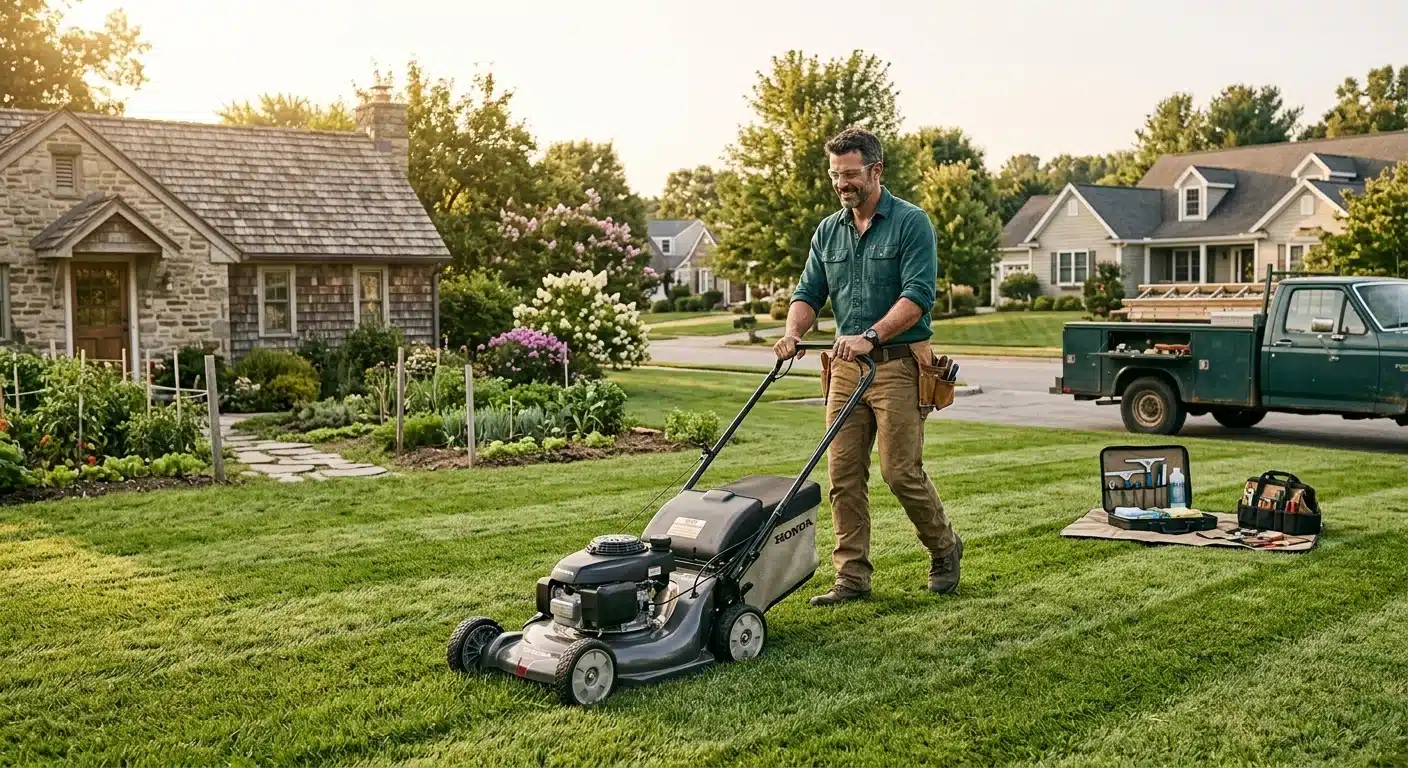
- How to build a route: Pick one subdivision. Focus all door hangers, flyers, and referral discounts there until your truck never leaves that zip code.
- Recurring revenue: Grass continues growing regardless of economic swings. Once clients sign, maintenance repeats weekly or biweekly.
- The biggest catch: Seasonality in northern regions. Plan winter services like snow plowing, gutter clearing, or holiday lighting to maintain cash flow year-round.
Section takeaway: Route density equals profit margin. Keep your territory tight and client retention high.
4. Mobile Notary and Loan Signing Agent
Best for: Detail-oriented individuals comfortable with precise documentation and client meetings.
Real estate purchases, refinances, and legal affidavits require certified notarization, driving strong demand for mobile notaries and specialized loan signing agents.
While established agents can bill $4,000 to $10,000 a month, earnings vary heavily depending on local real estate closing activity.

- Getting started: Certification typically costs $200 to $500. Review the business license requirements by state before investing, as statutory maximum fees vary widely.
- Building referrals: Your goal is getting approved on preferred rosters for 3 to 5 local title companies, mortgage brokers, and elder law attorneys.
- The biggest catch: Strict state regulations. Some jurisdictions cap standard notarization fees low, making real estate loan closings the only high-ticket angle.
Section takeaway: Low startup friction, but call local title offices first to confirm market demand before getting certified.
5. Knife and Tool Sharpening
Best for: People who enjoy tactile, repetitive craftsmanship and reliable B2B routes.
Very few entrepreneurs think to build a business around knife and blade sharpening, creating a wide-open niche in mid-sized towns.
Commercial kitchens, culinary academies, salons (shears), and landscapers need sharp blades every week to stay operating.

- The numbers: Direct consumable costs are exceptionally low — mainly abrasive belts and electricity. Profit margins often hover around 85% to 90% once equipment is paid for.
- Getting your first customers: Offer a free trial sharpening for the head chef at five popular local bistros. Once they feel the difference, set up a recurring swap program.
- The biggest catch: Driving efficiency. If you spend 45 minutes driving for a $30 job, you lose. Anchor clusters of restaurants together.
Section takeaway: A forgotten, low-overhead trade where commercial kitchens provide effortless weekly retention.
6. Pressure Washing
Best for: Operators seeking fast equipment payback and striking visual marketing proof.
Pressure washing delivers an instantaneous before-and-after contrast that sells itself effortlessly on social feeds.
At typical rates ($150 to $450 per driveway or siding job), beginner operators often recover their total initial machine investment within their first three to five jobs.
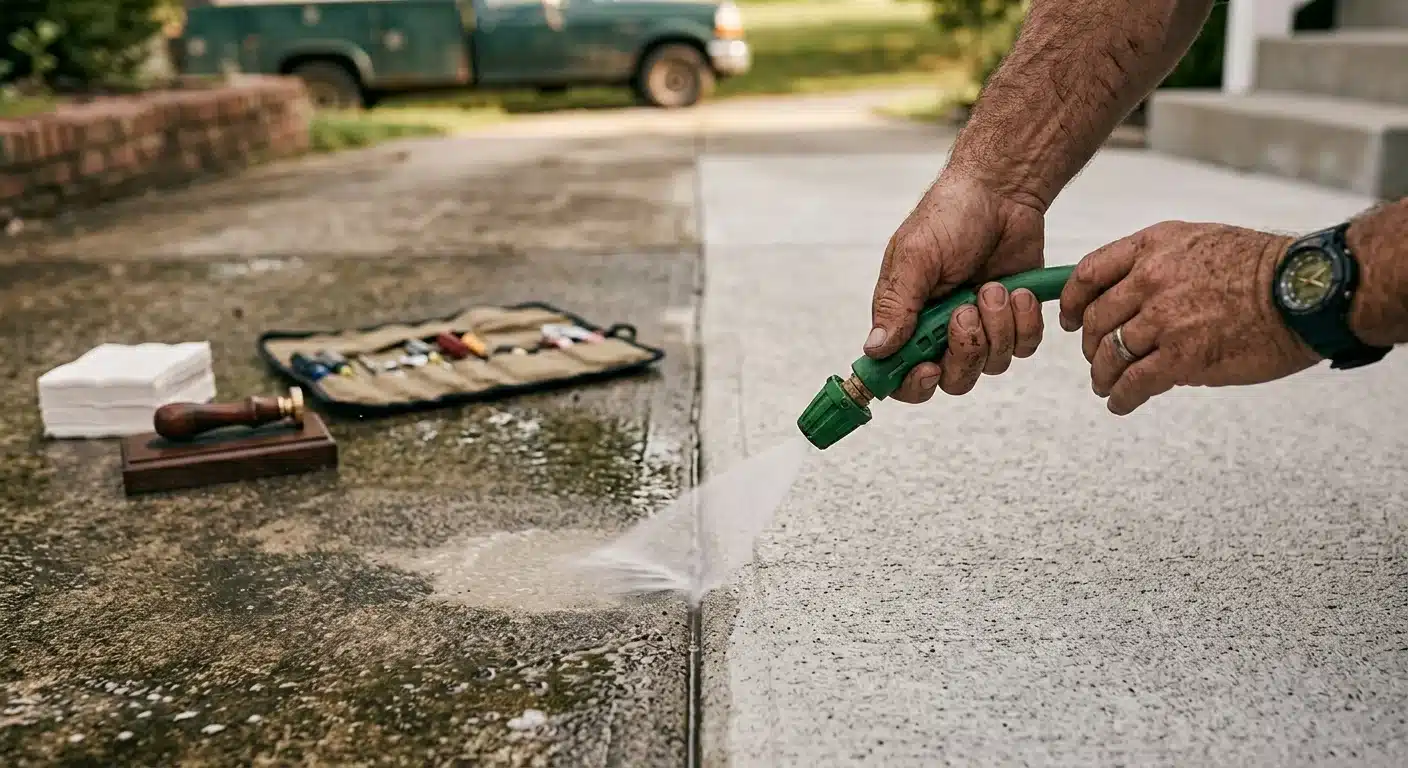
- The case study: One beginner operator, Curtis, started with an entry-level $600 machine and reached $11,000 in monthly revenue by month eight by executing video marketing aggressively on neighborhood forums.
- Getting your first customers: Video time-lapses of filthy driveways turning spotless shared to Nextdoor and Facebook groups convert faster than paper flyers ever will.
- The biggest catch: Seasonality and surface damage risks. Using incorrect PSI on soft siding or older masonry can trigger costly repairs if you lack proper soft-washing training.
Section takeaway: Highly visual, rapid cash recovery, but requires disciplined technique to avoid property damage.
7. Mobile Car Detailing
Best for: Automotive enthusiasts who take pride in perfectionism and white-glove service.
Mobile detailing solves an inconvenient problem: busy vehicle owners want showroom-clean cars without giving up their Saturday sitting in an auto waiting room.
A full interior extraction, exterior polish, and paint seal can command $200 to $400+ per vehicle right in their driveway.
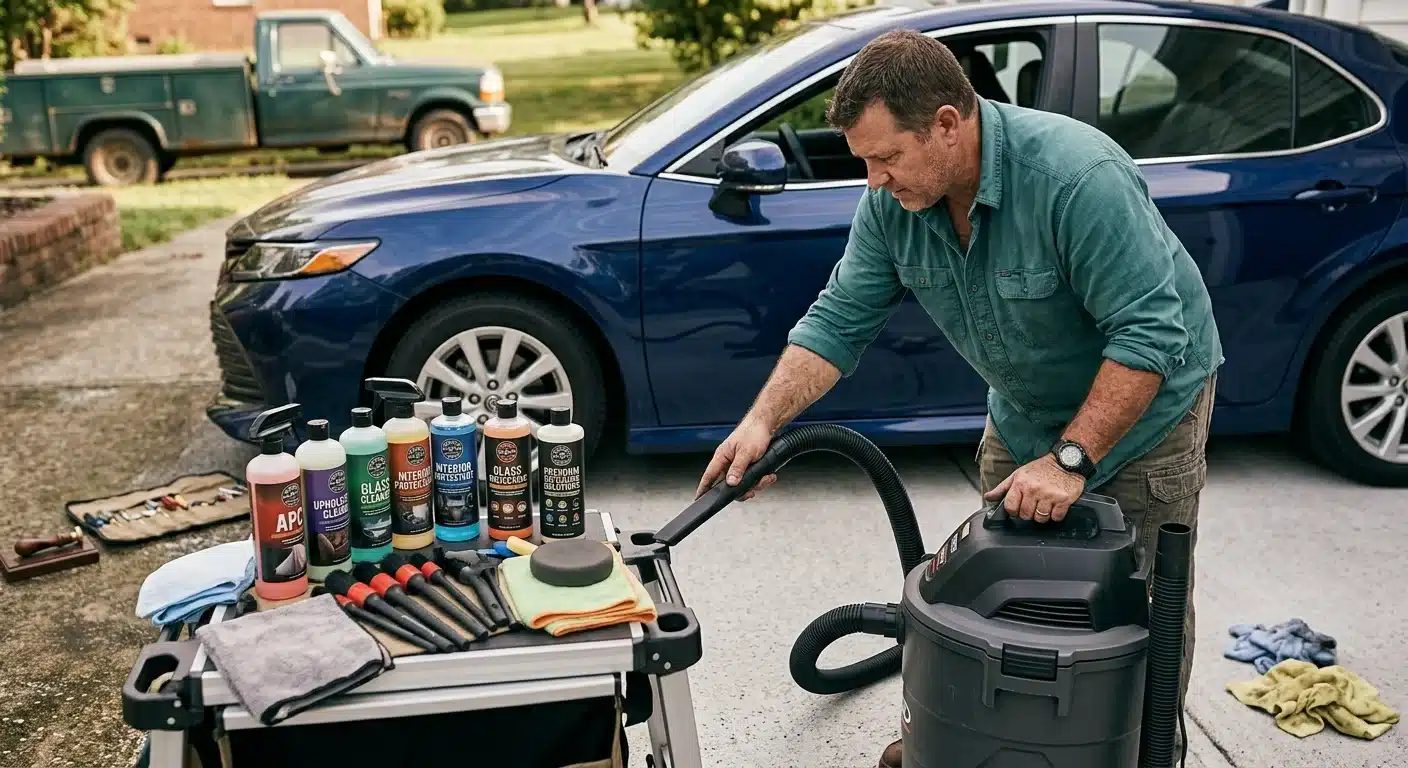
- Recurring revenue: Convert one-time deep clean customers into bi-weekly or monthly maintenance wash subscriptions at $75 to $125 per visit.
- Dealership partnerships: Local independent used-car lots often outsource pre-sale recon detailing. Just maintain firm price floors so volume doesn’t erode your margin.
- The biggest catch: Water and power logistics. Until you buy an onboard water tank and generator, you’ll need permission to hook up to customer utilities.
Section takeaway: High perceived luxury value with excellent potential for monthly maintenance memberships.
8. Pet Waste Removal
Best for: Entrepreneurs wanting the lowest capital barrier and the highest retention rate.
Pet owners adore their dogs, but universally despise scooping backyards.
Because it’s an unpleasant chore with continuous supply, customers rarely cancel once they experience a clean yard without effort. It is practically a utility subscription.

- Startup costs: Under $100 covers commercial-grade scoopers, sanitizing spray, heavy-duty waste bags, and a lined transport can.
- The business model: Charge $18 to $25 per yard visit. At 10 minutes per lawn on a dense street route, an operator can clear $60 to $80+ an hour in solo labor.
- The biggest catch: Low per-ticket revenue. You cannot drive 15 miles between yards and remain profitable; geographic concentration is non-negotiable.
Section takeaway: An unglamorous goldmine with zero customer churn and negligible capital risk.
9. Residential and Commercial Cleaning
Best for: Founders planning to hire quickly and step into operations management.
Cleaning is unique because it offers a natural, frictionless ladder from solo side-hustler to agency owner.
You can start by trading your own hours, build a loyal recurring clientele, and quickly hire cleaners to fulfill contracts while you focus on sales and quality assurance.

- Scaling tradeoff: A $15,000/month recurring book is attainable with 2 to 3 cleaners, but your role shifts from cleaner to dispatcher, payroll manager, and customer service lead.
- Commercial accounts: Dental clinics, law firms, and real estate brokerages offer steady night contracts and rarely switch vendors once trust is established.
- The biggest catch: Commercial contracts mandate commercial insurance before you step through the door. Securing general liability insurance for small businesses is a required early expense.
Looking for a low-impact home alternative? If physical cleaning isn’t your preference, consider launching a home-based gift basket business to serve local realtors and corporate clients with curated gifts instead.
Section takeaway: The simplest route to a multi-employee recurring service business with massive local demand.
10. Junk Removal
Best for: People who already own a truck or trailer and enjoy active physical jobs.
Junk removal unlocks two distinct monetization engines from a single job: homeowners pay you upfront to clear unwanted clutter.
And you often recover extra cash by reselling vintage finds, scrap metals, or functional appliances that would otherwise go to the landfill.
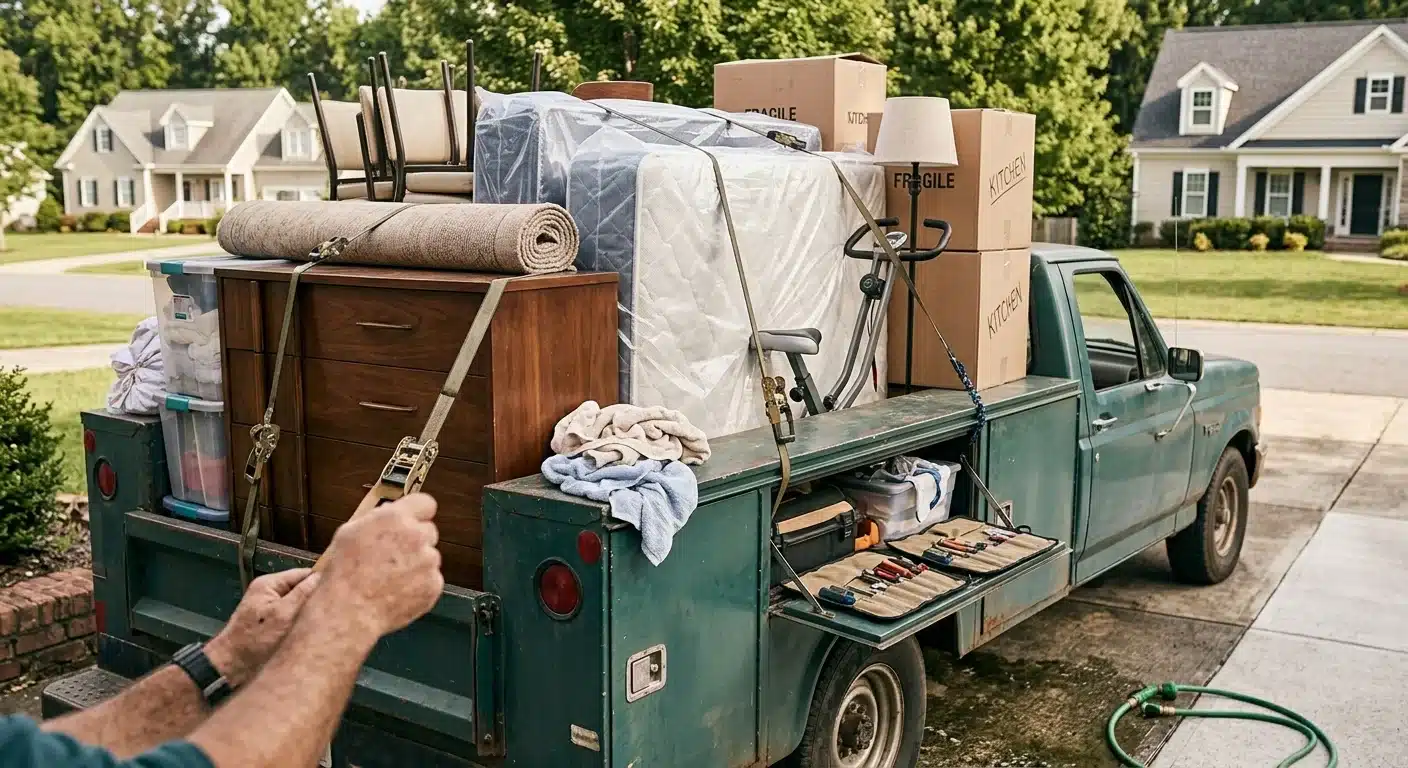
- The real profit constraint: Tipping fees at local landfills can eat 30% to 50% of your ticket price if you don’t calculate weights correctly. Know your transfer station fees down to the pound before quoting.
- Getting your first customers: Partner with local estate sales organizers, property managers doing eviction cleanouts, and realtors preparing homes for listing.
- The biggest catch: Most work is transactional rather than recurring. Sustained revenue demands continuous marketing and referral networking.
Section takeaway: High transaction tickets ($250 to $800+ per load) with bonus resale profit, but demands ongoing lead generation.
11. Mobile Phone Screen Repair
Best for: Tech-savvy individuals with steady hands who want a clean, on-demand mobile service.
Millions of smartphone screens crack every week, but no one wants to leave their lifeline device at a mall kiosk for three days.
You win this market entirely on immediate convenience by arriving at customer offices or living rooms and completing screen replacements in 25 minutes flat.
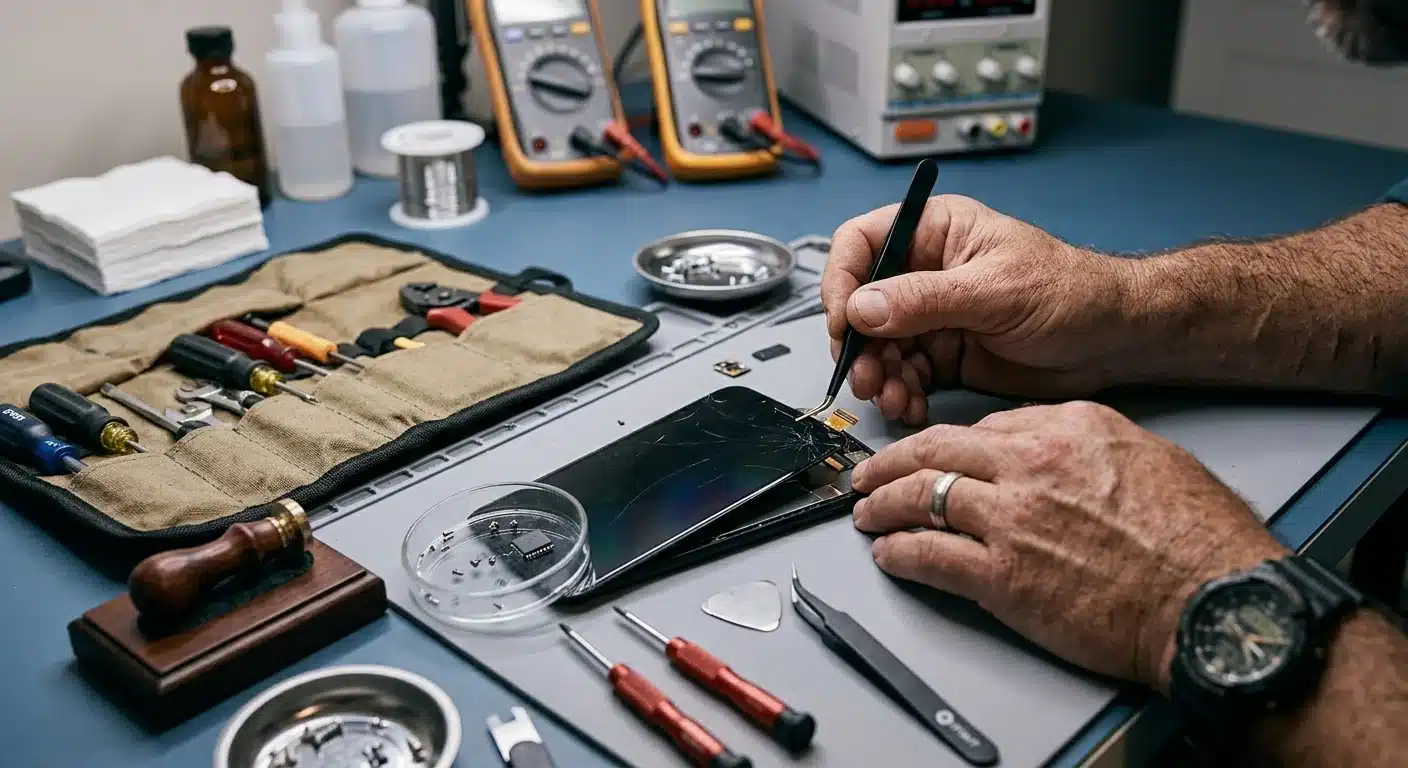
- Getting started: A complete precision magnetic tool kit and replacement screen inventory for popular iPhone and Samsung lines runs $300 to $800. Practice teardowns on broken test devices first.
- Upsells and retention: Stock tempered glass protectors, braided charging cables, and cases. Offer local businesses a corporate discount for employee fleets.
- The biggest catch: Parts quality variance. Sourcing cheap aftermarket glass leads to touch malfunctions and unhappy refunds. Work only with vetted tier-one wholesale suppliers.
Section takeaway: Rapid on-site turnaround turns an annoying crisis into a high-margin, word-of-mouth service.
Why “Boring” Businesses Win
Across all 11 ideas, the exact same underlying mechanics drive sustainable profits: low fixed overhead, transparent local demand, and tasks homeowners and managers would gladly pay to avoid.
The advantage is not that these operations are glamorous — it is that the customer already accepts that the service is necessary.

As Thomas J. Stanley documented years ago in the classic book The Millionaire Next Door, lasting wealth rarely comes from flashy tech startups.
It comes from ownership, disciplined frugality, and straightforward, unglamorous businesses.
Staying intentionally lean trades a theoretical revenue ceiling for lower overhead, zero employees, and full personal freedom. Selling to an existing customer again is always cheaper than fighting for a new lead.
How to Pick the Right One for You
Filter through these four diagnostic questions before buying a single tool:

- How much capital can you safely risk today? Pet waste removal can start for under $100. Knife sharpening and mobile notary work take a few hundred. Pressure washing and detailing need more upfront equipment.
- Do you want to stay solo or manage a staff? Window cleaning and detailing can remain lucrative solo trades. Cleaning services and lawn care are built to scale into multi-crew operations.
- Can you secure 10 paying customers without paid ads? If you cannot name 10 specific people or local business types that need this service right now, keep researching before spending money. (If physical services aren’t feasible for your schedule or physical stamina, exploring flexible digital options like AI side hustle ideas might be a better route.)
- Do these clients have built-in repeat purchase behavior? Weekly lawn care and biweekly pet waste removal generate reliable monthly retainers. Junk removal requires continuous lead generation.
The Real First Step
Sell the service before you build the business.
Before buying trailers, professional gear, or logos, talk to 20 actual homeowners or commercial managers in your target area.
Describe what you offer, give a specific price, and ask for a deposit or booking commitment — not just polite encouragement.
Once the money starts rolling in, remember that independent operators must track expenses diligently; review the official IRS guidance on self-employment tax early so you don’t face unexpected quarterly penalties.
If you balance family commitments alongside your business plans, explore our roundups of passive income ideas for stay-at-home moms to build multiple complementary revenue streams.

Your validation checklist
- Pick one specific local problem from this list.
- Secure three paying customers with deposits in hand.
- Rent or purchase only the minimum gear needed to service those three jobs.
- Deliver exceptional work, gather reviews, and let that initial revenue fund your tools.
The machine was never the business. The business is a real problem, a customer willing to pay you to solve it, and a repeatable way to deliver the solution.
More Ways to Build Financial Freedom
If starting a high-profit local business has you thinking about other pathways to extra income, explore these practical resources:
- Grab our free printable directory of 200 Ideas to Generate Extra Income.
- Find out how to start a small business with no money in 2026.
- Explore AI side hustle ideas for location-independent work.
- Learn how to build a profitable home-based gift basket business.
- Discover low-stress passive income ideas for stay-at-home moms.
Enjoyed this blueprint? Subscribe for our free weekly business & side hustle newsletter → Practical business models, local market strategies, and real profit breakdowns delivered straight to your inbox.