You know we all have false beliefs about how the world really works. One of the biggest? That to make money, you need a degree, certifications, and a “real job.” That belief is one of the biggest traps in human history.
Here’s how money actually works: you get paid by giving value to other people’s lives — by making something easier for them. The more value you give, the more you earn. And in this blog, we’re talking about one simple way to give that value: your voice.
I’m going to share 10 real ways you can make money with your voice — including the story of Alice Everdeen, who once made close to $10,000 in a single month doing voice-over work, working just 5 hours a day. Keep reading, and I hope you find at least one method here you can start using to bring in extra money from home.
Let’s dive in.

10 Real Ways to Make Money From Home With Your Voice
1. Audiobook Narration — Best for Steady, Long-Term Income

This is the most predictable path in voice work. You get paid one of two ways: a flat per-finished-hour rate ($50–$400, depending on experience), or a royalty split — 25 to 40% of every sale, for as long as the book keeps selling.
The royalty route is the real hook here. You narrate for free upfront, split the revenue with the author, and if the book takes off, you’re earning long after you’ve stopped recording. Narrators who build a catalog of 20+ titles often end up with genuine month-to-month passive income — some clear $40,000–$70,000 a year, and top narrators go well into six figures.
It’s a great fit if you’ve got clear diction, the stamina to sit through hours-long recording sessions, and can keep a character’s voice consistent from page 1 to page 300. Getting started costs nothing — you just create a free ACX profile and start auditioning.
2. Voiceover Platforms (Voices.com, Fiverr, Upwork) — Best for Flexible Gig Work
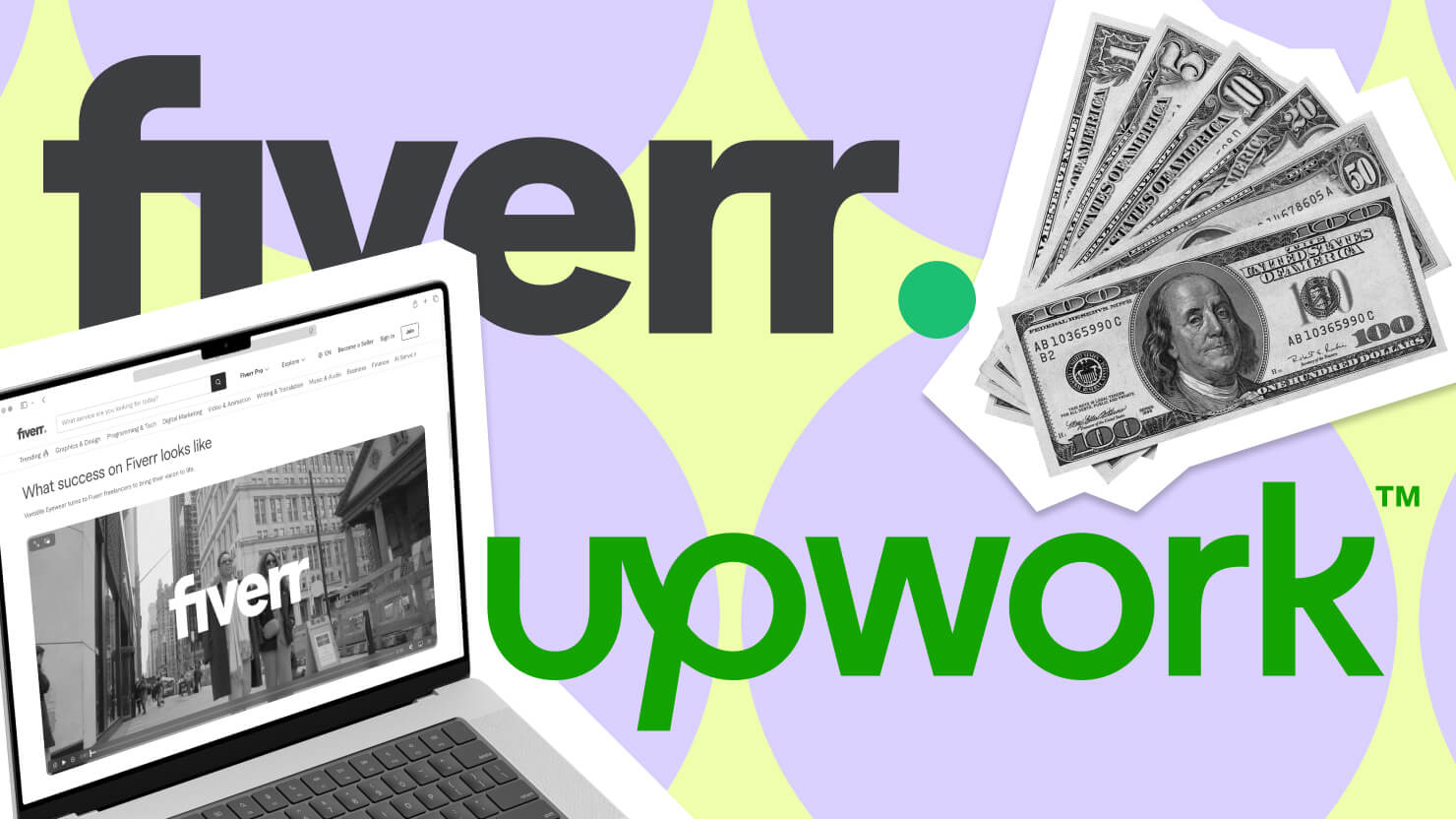
These are basically job boards for your voice. Clients post projects — commercials, e-learning modules, YouTube intros, phone greetings — and you audition or bid with your demo. Rates start around $50–$500+ per job, and if you’ve got a solid sample and a little hustle, you can book your first paying gig within a week.
The review system is what makes this scale. Talent with strong ratings and a track record of finished projects end up charging 3-5x what beginners get for the same kind of work — the platform rewards consistency, not just talent. And you’re not handling invoices or file delivery yourself; the platform takes care of that so you can just focus on recording.
It’s a great fit if you want flexible hours or a way to stack income on top of what you’re already doing. This is actually the path Alice Everdeen — the voice-over freelancer we mentioned earlier — used to build her income, working through platforms like Fiverr with fast turnaround and consistent quality.
Getting a profile up is free. Platforms typically take 20-30% of what you earn per project, and some offer paid memberships ($300–$500/year) for better visibility if you want to invest once you’re established.
3. Podcast Hosting & Sponsorships — Best for Building an Audience

This one takes longer to pay off, but it builds something the other methods don’t: an audience that’s actually yours. Once you hit roughly 1,000–5,000 monthly listeners, sponsors start paying — usually $18–$50 per 1,000 listeners (called CPM), which can add up to anywhere from $50 to $5,000+ per episode as your show grows.
The best part is ownership. Your listeners follow you, not a platform — so unlike gig work, you’re building something that keeps paying even if you switch where you host it. And once sponsors see you have real engagement, direct deals often pay 2-3x what the ad networks offer.
This path fits best if you’ve got a topic you actually know well, or a personality people want to keep listening to. You don’t need studio-quality production — some of the most successful shows are just honest conversations with light editing.
Starting is free (Spotify for Podcasters or Buzzsprout are common picks), and there’s no fee taken out of direct sponsor deals — the platform costs come in later, if you choose paid features.
4. YouTube Voiceovers & Content Narration

You don’t need to be on camera to make money on YouTube. Thousands of channels — story channels, explainer videos, top 10 lists, true crime recaps — need a voice, not a face. That’s exactly where you fit in.
Here’s what makes this one worth your time: once you record it, the work is done. The video keeps racking up views on its own, and you keep earning from it without lifting another finger. That’s the real hook — income that keeps coming in while you’re doing something else entirely.
Starting is simpler than people think. Channel owners just want a clear, easy-to-listen-to voice. You don’t need a professional studio or years of training — a quiet room and a decent mic is enough to get you in the door.
And here’s the best part: this one grows on its own. Do a good job once, and that same channel will likely come back to you again. String together a few of those relationships, and you’ve got steady work coming in without ever having to chase it down.
5. Commercial Voiceovers — Best for High-Earning Projects

This is where the real money shows up. Local radio and video ads pay $200–$500 for a single 30-60 second spot. Regional or national campaigns push that to $500–$2,500+. And union work through SAG-AFTRA pays even more — a guaranteed minimum of $202.50 per session, plus residuals every time the ad airs again.
Local businesses need this kind of voice work constantly — radio spots, phone greetings, promo videos. If you reach out directly to agencies or production companies instead of going through a marketplace, you skip the platform’s cut entirely and keep 100% of what you negotiate.
This path works best if you’ve got a strong demo reel that shows range, and you’re comfortable networking and taking direction well. Many voice actors start without a union and move into SAG-AFTRA work once they’ve built up steady clients — union membership locks in minimum pay and adds residuals on top, which non-union work doesn’t guarantee.
Nationally, commercial voiceover work averages around $55/hour — though in bigger markets, experienced voices can charge well over $100/hour.
6. Online Singing & Music Lessons — Best for Teaching Your Expertise

If you can sing and explain how you do it, this one turns into steady income fast. Platforms like TakeLessons, Superprof, and Lessonface handle finding you students — you just show up on video and teach. Rates run $30–$150+ an hour, and you keep 50-80% after the platform’s cut.
The shift to remote learning changed the game here — you’re no longer limited to students in your town, you’re teaching anyone with an internet connection. And unlike one-off gigs, lesson students tend to stick around — weekly or biweekly for months at a time — which means your income each month is a lot more predictable than gig-based voice work.
This works best if you’re a patient communicator who can break down technique clearly, not just someone who sings well. Formal training helps, but it’s not required — students mostly want results, whether that’s better technique, performance prep, or coaching in a specific style.
Teachers who build direct relationships with students (instead of relying only on the platform to find new ones) keep 100% of their fees. Many instructors end up with 10–20 regular students bringing in $1,500–$4,000 a month on the side.
7. Voice Acting for Video Games & Animation — Best for Specialized Long-Term Work
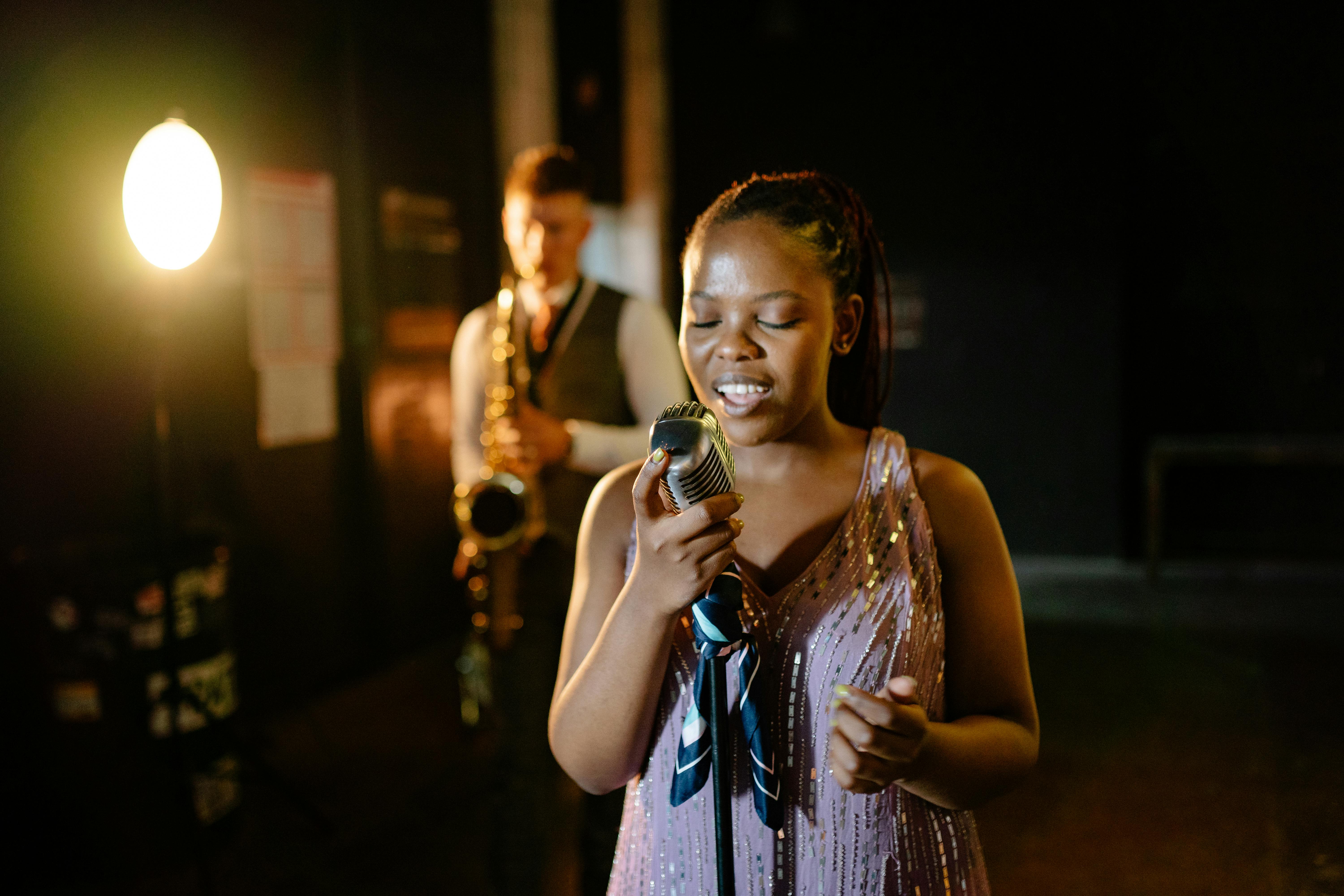
This one rewards range and character work. Indie games pay $100–$300 per session, while AAA studio productions can pay $500–$2,000+ per session — sometimes with royalties on top. Animation work, whether for YouTube, streaming, or traditional studios, runs $200–$1,000+ per episode.
What makes this path pay off long-term is the relationships you build. Many voice actors start with unpaid or low-paid indie projects just to build a demo reel, then move into paid studio work once they’ve proven themselves. Studios that like your work often bring you back for recurring characters across years of a project.
This is the right fit if you can take direction well, hold a character consistently across multiple sessions, and enjoy the more performance-heavy side of voice work — it’s less about reading a script and more about acting.
Fees are usually negotiated directly, so there’s no platform cut on direct contracts. Union work under SAG-AFTRA guarantees even more — a minimum of $956.75 for a 4-hour session.
8. AI Voice Training & Licensing — Best for Passive High-Yield Income

This is the newest way to make money with your voice, and it’s low-effort by design. Companies pay $1,000–$5,000+ upfront just to license your voice for AI training — usually for only 1-2 hours of recorded speech. Once it’s licensed, your voice can keep earning royalties every time it’s used in text-to-speech tools, virtual assistants, or AI-generated content.
The appeal here is real passive income — you record once, get paid upfront, and then keep earning without doing more work. Exclusive licensing deals pay more than non-exclusive ones, and some platforms even increase your royalty percentage as usage grows.
This is a good fit if you’re comfortable signing an exclusive agreement (meaning your voice can’t be licensed elsewhere) in exchange for higher pay. It suits someone who wants income that doesn’t depend on constant new projects.
Typical deals run $1,000–$5,000 upfront plus 5-20% royalties on usage, though some companies offer full buyouts of $5,000–$10,000+ with fixed terms instead of ongoing royalties.
A quick note: exclusive AI voice licensing is still a newer, less-regulated space. Read any contract carefully before signing away exclusive rights to your voice.
9. Corporate Training & E-Learning Voiceovers — Best for Steady B2B Income

If you want reliability more than excitement, this is your lane. Companies are constantly updating training modules, compliance videos, and product walkthroughs — and they pay $200–$1,500 per project for it. Unlike entertainment work, corporate clients budget for this regularly, so the income is a lot more predictable.
The vocal style is simple: clear, professional, no character work required. What matters more is following scripts and pronunciation guides accurately. And because companies keep expanding their training libraries, one good client often turns into repeat work.
This fits best if you’d rather have steady, low-drama projects than performance-heavy gigs. Many corporate voice actors build relationships with just 3-5 regular clients and get consistent monthly income from them — some even land retainer deals that guarantee pay in exchange for being available when needed.
Rates run $200–$1,500 per project, sometimes priced per word ($0.20–$0.50), and retainer arrangements can lock in guaranteed monthly income on top of per-project fees.
10. Fiverr Gigs & Direct Voice Services — Best for Getting Started Immediately

If you just want to start today, this is the fastest on-ramp. You can list a gig for $5–$25, get your first order within days, and grow from there — no demo reel, no equipment requirements, no approval process. As your reviews build, gigs scale up to $100–$500+.
Fiverr’s level system (New Seller → Level 1 → Level 2 → Top Rated) is what drives the growth — better reviews mean more visibility, which means higher-paying orders come to you. Many sellers go from $5 gigs to $200+ premium gigs within 6-12 months just by staying consistent.
This is the best fit if you’re brand new and want quick proof that people will pay for your voice, or if you already do voice work elsewhere and want an easy way to pick up extra orders. Gig types range wildly — commercials, jingles, character voices, phone greetings, audiobook samples — so there’s room to find what suits you.
Fiverr takes 20% of what you earn, and you set your own base price with add-ons (rush delivery, revisions, commercial rights) on top. Top performers in this space report $2,000–$10,000+ a month through volume.
How We Picked These 10
We looked at over 25 ways to make money with your voice and narrowed it down to the 10 that actually hold up. Here’s what we checked for:
- Real numbers, not guesses — rates and earnings backed by actual platforms, verified user reports, or published data from 2025-2026
- You can actually start — could a beginner realistically start earning within 30 days, with basic gear that costs $100-$300?
- Room to grow — does your income go up as you get better and build a reputation, or does it stay flat forever?
- A mix of steady and one-off work — some methods pay per project, some build recurring income, and we wanted both kinds represented
- Something for every voice — narration, character work, singing, casual speaking, professional tone — not just one style
To be clear: this is research, not hands-on testing. We pulled from platform data, sites like Indeed and Glassdoor, voice talent forums, and market reports — we didn’t personally try every platform ourselves. Every earning number in this post traces back to one of those sources.
And no, this isn’t a sponsored post. No affiliate links, no paid placements. We just want you to have accurate information so you can make a real decision.
Frequently Asked Questions
Which method makes money the fastest?
Fiverr gigs and AI voice licensing get you paid the quickest — sometimes within 1-3 days. Commercial voiceovers and union work pay more per project ($500–$2,000+), but they take time to build up to. If you want to hit $1,000 fast, start a Fiverr gig for quick cash flow, and look into AI voice licensing for a bigger upfront payment with very little time invested.
Can I do more than one of these at once?
Yes — and honestly, most people who make real money this way do exactly that. A common mix looks like: audiobook narration for passive royalties, Fiverr for quick active income, YouTube voiceovers for slow passive growth, and teaching for steady recurring cash. Mixing methods keeps your income steadier and uses more of your time well.
Do I need fancy equipment to start?
Not really. A decent USB mic ($50–$200), free software like Audacity, and something to soften the room (even blankets work) is enough to get going. Most platforms just want clear audio with no background noise — not studio-quality gear. You can always upgrade later once you’re actually earning.
What if I’m not a “real” professional?
You don’t need to be. Fiverr, teaching hobby singers, podcasting, and YouTube are all beginner-friendly. Start where the bar is low, build up a portfolio as you go, and reinvest what you earn into getting better. Plenty of people doing this full-time started as amateurs who just kept showing up.
How often is this info updated?
We update the numbers and platform details every few months, since rates and rules change as the voice work market grows. Bookmark this post — we’ll keep it current with 2026-2027 rates as things shift.
Conclusion
If you only try one thing from this list, make it audiobook narration. It gives you both — real cash up front through per-finished-hour rates, and long-term passive income through royalties. Start on ACX today, and you could realistically hit your first $500 within about 2 months.
If you want to move faster, do this instead: start a Fiverr gig for quick income, license your voice for AI work for a fast upfront payment, and build a YouTube channel or podcast on the side for income that grows on its own over time. You get cash coming in right away, while building something that keeps paying later.
Either way — pick one, start today, and let your voice start earning for you.
Which Path Fits You?
- Need money fast? Start a Fiverr gig or look into AI voice licensing this week.
- Want income that keeps coming in? Build an audiobook narration portfolio or start a YouTube voiceover channel.
- Love teaching? Online singing lessons or podcasting let you turn what you know into income directly.
- Want the highest pay per project? Spend 2-3 months building a real demo reel, then go after commercial and union work.
- Have a niche you know well? Podcasting or YouTube commentary is where that expertise pays off.
Now it’s your turn. Which method fits your voice and your goals? Pick one main path, and one backup. The people earning $3,000–$10,000+ a month with their voice all started exactly where you’re standing right now — the only difference is they started.
Keep Going
- Read our full guide to building a professional voice demo reel
- Set up a home studio for under $500
- Voice acting vs. singing: which path fits you better?
Tell us: Which method are you trying first? Drop a comment below — we’d love to hear where you’re starting and help answer any questions along the way.