You love making art. That part comes easy. The hard part is turning that talent into a paycheck without burning out or giving up on your craft.
The good news is you don’t need one big lucky break to make this work. Most artists who make a full-time living from their work do it by stacking a few income streams instead of betting everything on one. If one slows down for a month, the others carry you. Whether you’re looking for small business ideas that need no special skills or want to go deeper into your craft, there’s an income stream here that fits.
Below are the income streams artists are using in 2026, along with rough earning ranges and examples. Your actual results will vary based on your audience size, your niche, your pricing, and even where you live.
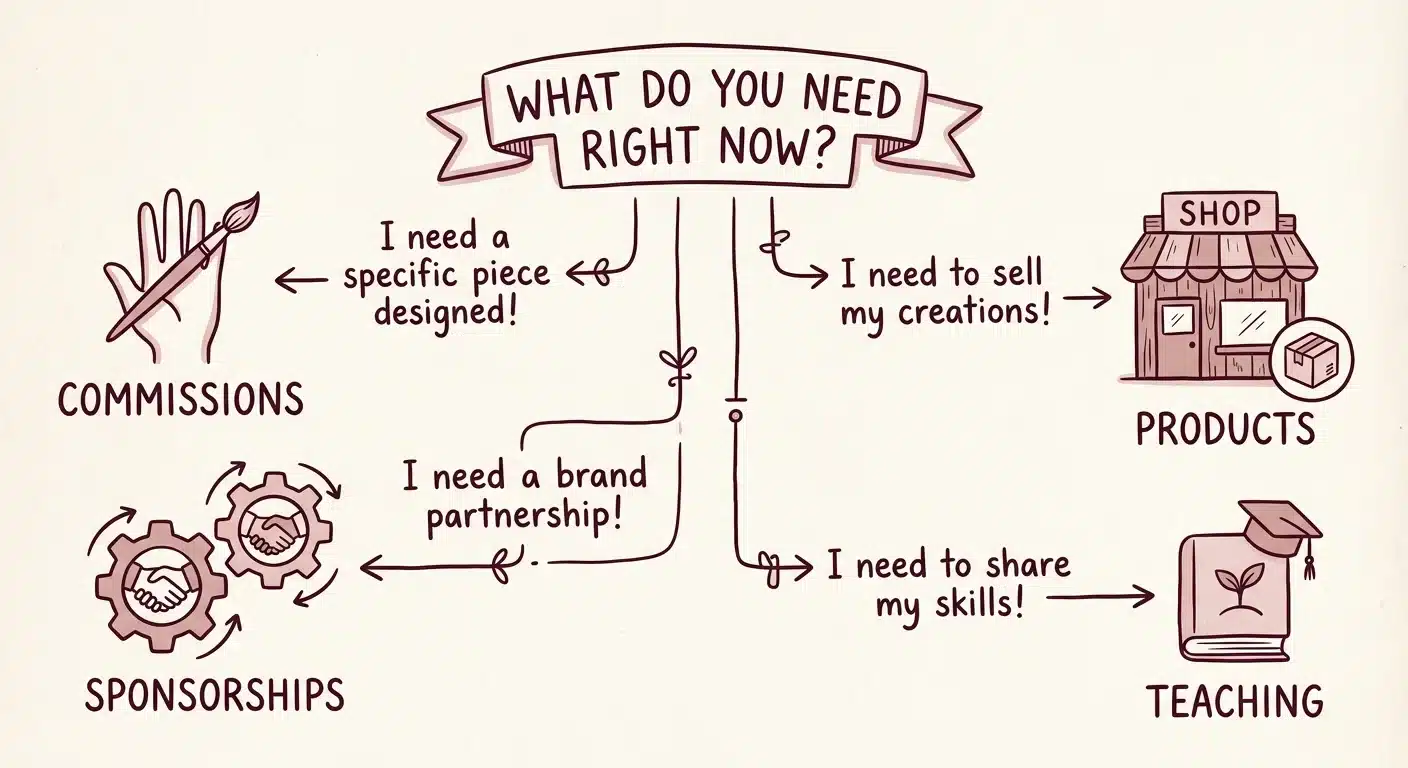
Quick answer: Need money now? Start with commissions or freelance work. Already have an audience? Try sponsorships or memberships. Have designs people already love? Add products or wholesale. Constantly get asked how you work? Teaching might be your fastest win.
Here’s what we’re covering:
- How to pick the right streams for you
- 1. Freelance and commission work
- 2. Content creation and audience building
- 3. Brand sponsorships
- 4. Online shops: Etsy and Shopify
- 5. Wholesale: selling to stores
- 6. Memberships and Patreon
- 7. Print-on-demand and licensing
- 8. Teaching and workshops
- What it actually costs to run an art business
- Managing the business side without losing your mind
- Final thoughts
Ready to see how each stream works? Here’s the complete breakdown, from commissions and content to memberships and licensing.
How to Pick the Right Streams for You
You don’t need all eight of these. Trying all eight at once is a fast way to burn out.
Need money now? Start with commissions or freelance work. Already have an audience? Try sponsorships or memberships. Have designs people already love? Add products or wholesale. Constantly get asked how you work? Teaching might be your fastest win. And if you prefer to build income without showing your face at all, our guide to faceless business ideas for busy moms has even more options.
Diversifying your income protects you from a slow month on any one platform, but diversification isn’t the same as doing everything. Build a small mix you can actually sustain, not a checklist of half-built income streams.
Quick Comparison: Artist Income Streams at a Glance
| Income Stream | Typical Earning Range | Best For |
|---|---|---|
| Freelance and commission work | $50 to $500+ per project | Artists who need cash sooner and don’t mind working to a client’s brief |
| Content creation and audience building | Direct payouts vary widely | Artists comfortable on camera or willing to learn |
| Brand sponsorships | $300 to $1,000+ per project | Artists with an engaged audience, even a small one |
| Online shop (Etsy/Shopify) | $300 to $900 a month | Artists who make physical products like prints or pins |
| Wholesale | Thousands per year | Artists ready to produce in bulk |
| Memberships / Patreon | $700 to $900+ a month | Artists with a loyal following who post regularly |
| Print-on-demand and licensing | $100 to $1,000+ a month | Artists who want lower-maintenance income from existing art |
| Teaching and workshops | $200 to $800+ per session | Artists who enjoy explaining their process |
Please note: These numbers are rough examples pulled from artists further along in their journey, not guarantees. Your actual results will vary based on your audience size, niche, pricing, and location.
Now let’s walk through each one, roughly in the order most artists build them.
1. Freelance and Commission Work
Best for: Artists who need cash sooner and don’t mind working to a client’s brief. Typical range: $50 to $500+ per project.
This is usually the fastest way to bring in money, especially before you have an audience of your own. Instead of hoping someone buys what you already made, you make something a specific client already wants. If you enjoy graphic design side income, commissions are a natural starting point.
The tradeoff is control. Commissions can bring in money faster, but you’re working to someone else’s brief, timeline, and specifications.
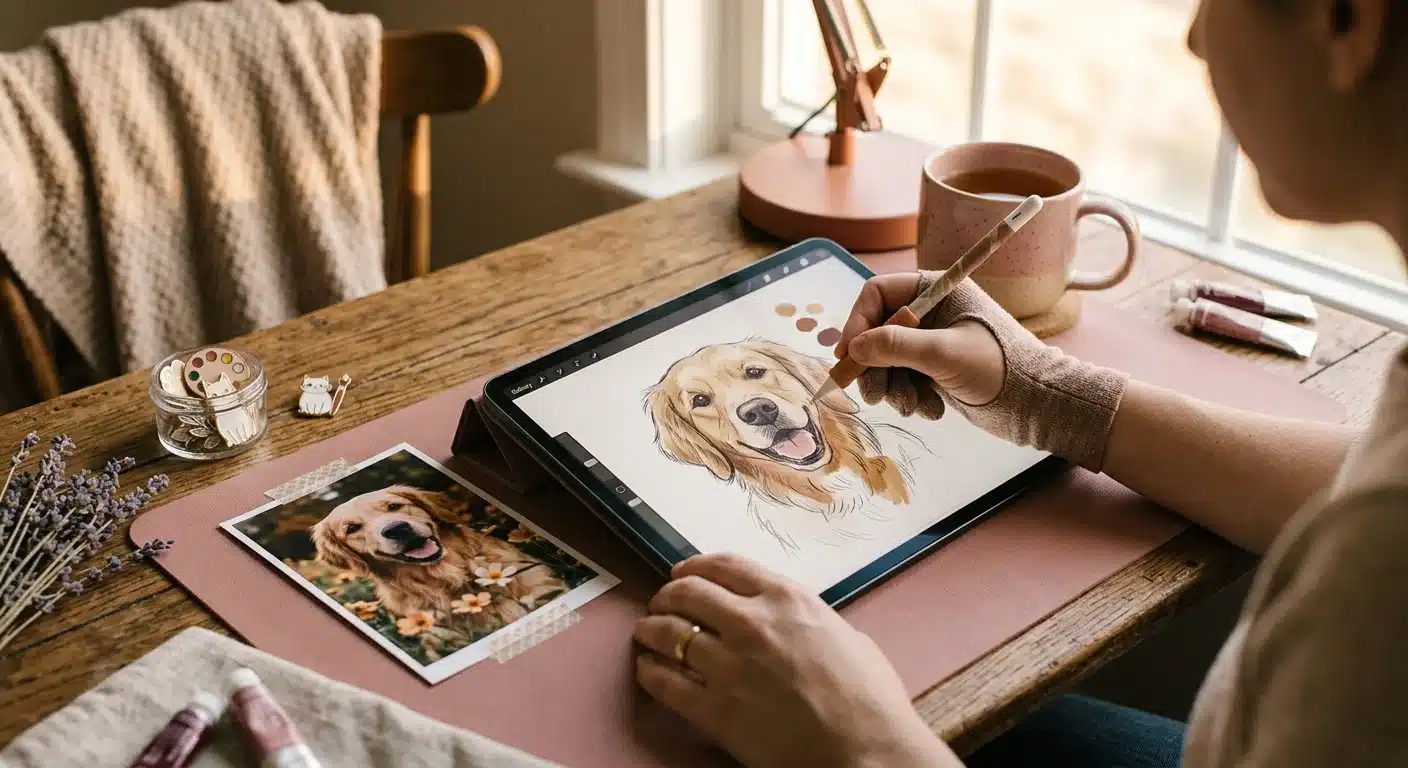
What Commission Work Can Include
- Custom and pet portraits — for individual clients
- Logo and brand assets — for small businesses
- Book covers and character art — for authors
- Editorial illustrations — for magazines and blogs
Pro Tip: Set your scope and price before you start. Estimate how long the piece will take, build in a buffer for revisions, and decide your minimum project price. Spell out the deposit, included revisions, final-payment date, commercial rights, and rush fee before you begin.
Section takeaway: Commissions are the fastest way to earn as an artist, but set your terms upfront so the work stays profitable.
2. Content Creation and Audience Building
Best for: Artists comfortable on camera or willing to learn. Direct payouts vary widely.
Every stream on this list gets easier once people know who you are. Short-form video is one of the easiest ways to get your work in front of new people right now, but views only matter if you give those people somewhere to go next.
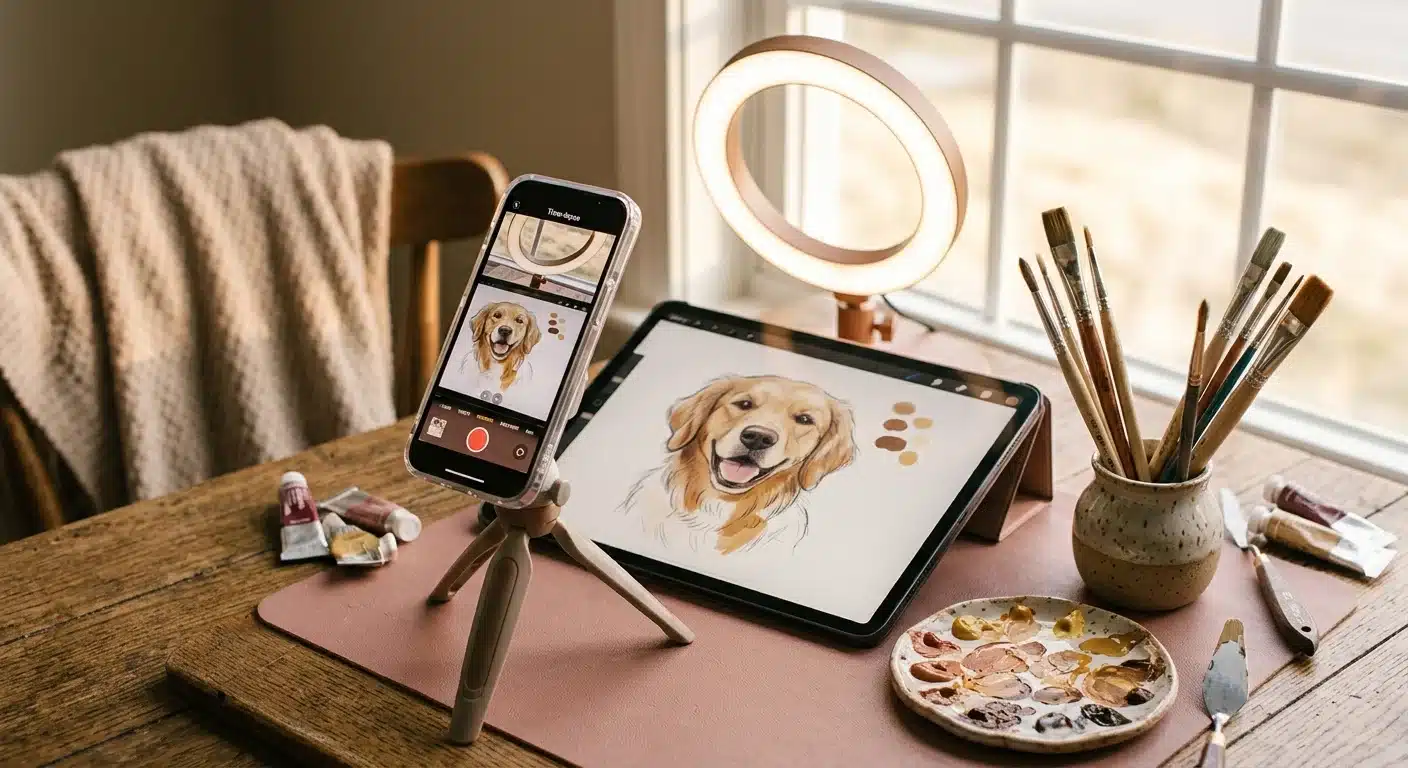
- Instagram Reels and TikTok — a painting time-lapse or satisfying process clip can earn attention because viewers get to watch the image take shape. You can also make money with Canva to create polished thumbnails and graphics for your posts.
- YouTube — this platform rewards longer content like full tutorials or “day in my art business” vlogs. Once you’re eligible for the YouTube Partner Program and meet its current requirements, you can earn from ads and other monetization features.
- TikTok — a single video can go viral and send hundreds of new orders to your shop in a single day. That upside comes with real operational risk if you’re not ready for it.
Before chasing viral reach, give every platform somewhere useful to send people, whether that’s your shop, email list, membership, commission page, or portfolio. That way, a viral video can create orders, subscribers, or inquiries instead of a one-day spike in views.
Pro Tip: Make sure your shop, inventory, fulfillment process, and customer support can handle a sudden rush of orders before it happens. You don’t need expensive gear. A smartphone, a stable camera angle, and good natural or inexpensive lighting are enough to start. Consistency and personality matter more than production value.
Section takeaway: Building an audience takes time, but it makes every other income stream on this list easier to monetize.
3. Brand Sponsorships: Get Paid to Create
Best for: Artists with an engaged audience, even a small one. Typical range: $300 to $1,000+ per project.
Once you have an audience that regularly comments, shares, saves, clicks, or buys, even a small following can attract brands. Sponsorships are often the highest-paying stream on this list.
What brands are really looking for is engagement, shown through comments, saves, shares, link clicks, repeat viewers, email subscribers, and sales. A smaller, highly engaged audience can be more valuable to a brand than a much larger audience that rarely interacts.
How to Get Started With Sponsorships
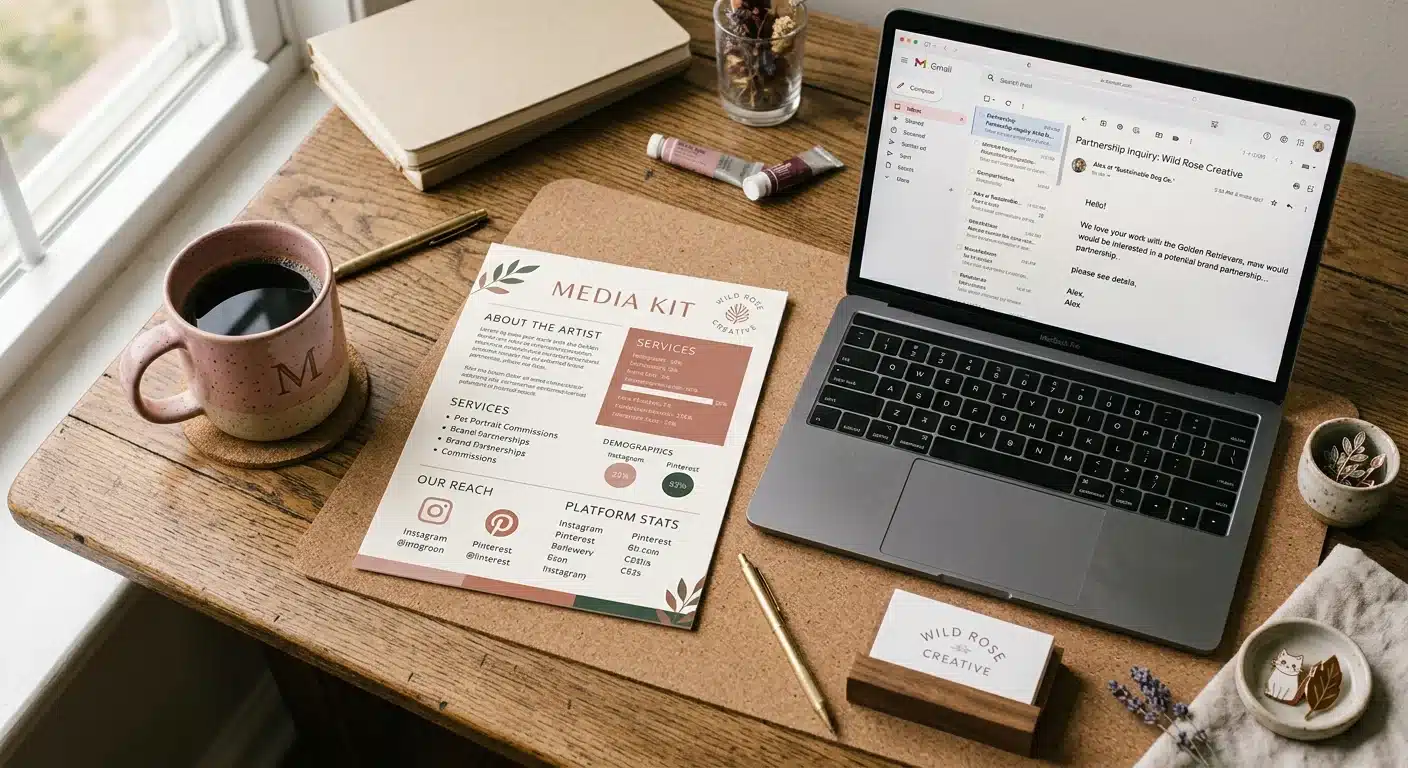
- Build a media kit — a one- or two-page PDF with your best work, audience stats, and past brand partnerships
- Make it easy to say yes — a brand’s social team should be able to evaluate you without digging through your entire profile
- Vet every opportunity — when a brand reaches out, make sure the deal fits your audience
- Review deliverables — be clear about what you can create, and review every deliverable before you say yes, not just the headline fee
Section takeaway: You don’t need millions of followers to land sponsorships. Engagement matters more than reach, and a simple media kit can close the deal.
4. Online Shops: Etsy and Shopify
Best for: Artists who make physical products like prints, enamel pins, stickers, or apparel. Typical range: $300 to $900 a month.
Selling physical products is one of the most direct ways to turn your art into cash. Prints, enamel pins, stickers, apparel, and phone cases are all popular starting points. For more ideas on what sells, check out our list of best-selling digital products on Etsy.
Etsy vs. Shopify: Which Is Better for Artists?
| Factor | Etsy | Shopify |
|---|---|---|
| Traffic | Built-in marketplace of active shoppers | You drive your own traffic |
| Control | Limited branding and store layout | Full control over branding and customer experience |
| Fees | Listing, transaction, and payment fees | Monthly subscription plus payment processing |
| Best for | New sellers who want existing buyer traffic | Sellers ready to build their own brand destination |
Pro Tip: Price for profit, not just cost recovery. Start with materials, packaging, platform and payment fees, labor, and a share of your overhead, then add your target profit on top. If a sale only covers your costs, you haven’t built a business. You’ve built an expensive hobby.
Section takeaway: Etsy gets you in front of buyers faster. Shopify gives you more control. Many artists eventually use both.
5. Wholesale: Selling to Stores
Best for: Artists ready to produce in bulk. Typical range: thousands per year from a single steady account.
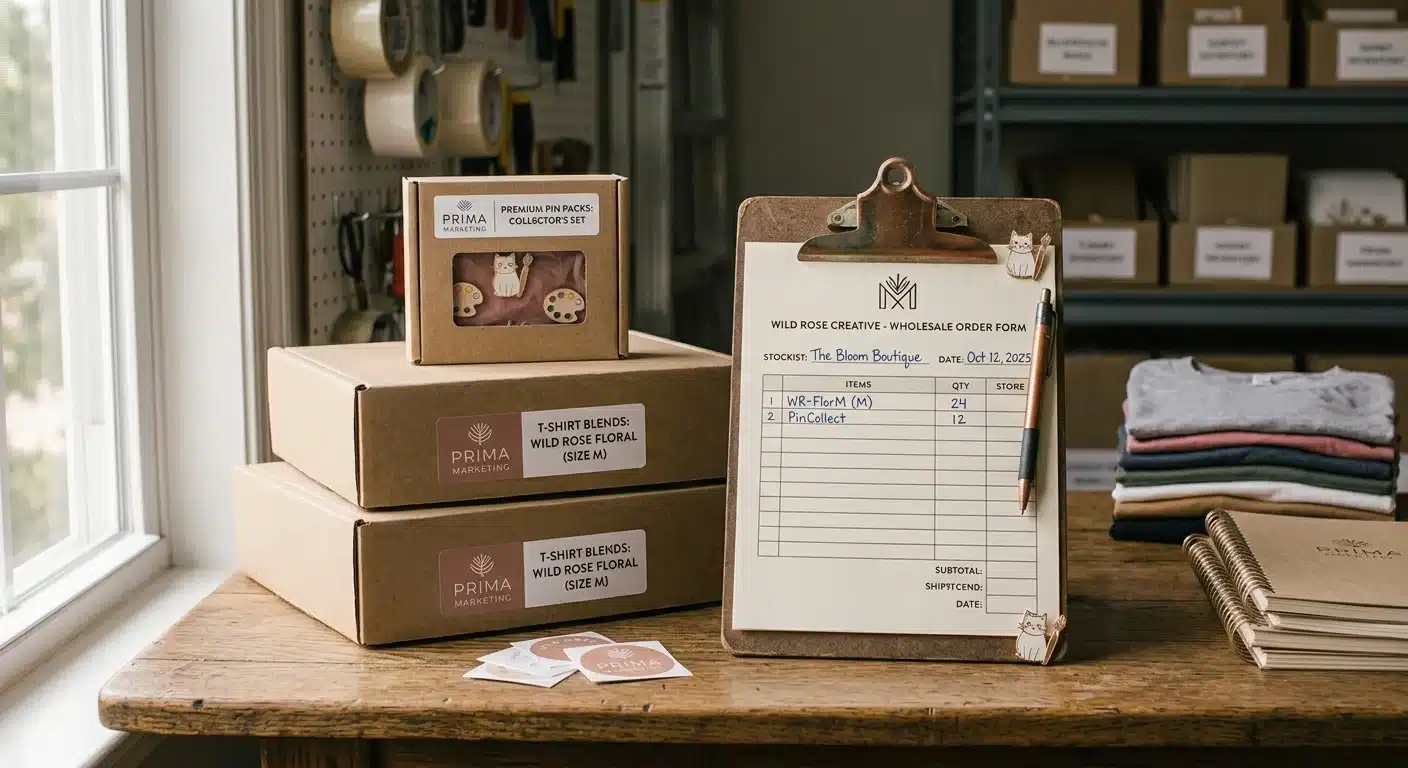
Wholesale means selling your products in bulk to retail shops instead of one item at a time to individual customers. Platforms like Faire connect independent artists with shop owners looking for unique products to stock.
Wholesale pricing has to leave room for your profit and the retailer’s markup. Start with your true unit cost and target wholesale profit, then check that the resulting wholesale price leaves the retailer enough room to mark up the product.
Before You Pitch Any Store
- Know your production capacity — can you reliably fill bulk orders on time?
- Set a minimum order quantity — protect yourself from tiny orders that aren’t profitable
- Nail your turnaround time — stores need to know when they’ll receive stock
- Plan for reorders — a good wholesale account is a repeat relationship, not a one-off
Wholesale takes more upfront investment because you’re producing inventory before you know how quickly it will sell. But a single steady wholesale account can quietly generate thousands of dollars a year, especially with products like t-shirts, pins, or stickers that are cheap to produce at scale.
Section takeaway: Wholesale is slower to start, but one steady account can outperform dozens of individual sales.
6. Memberships and Patreon: Recurring Income
Best for: Artists with a loyal following who post regularly. Typical range: $700 to $900+ a month.
A membership platform like Patreon gives you something most other income streams can’t, which is recurring monthly revenue. Instead of chasing one-time sales, you build a small group of supporters who pay you every month. This is one of the strongest passive income ideas that actually work for artists.
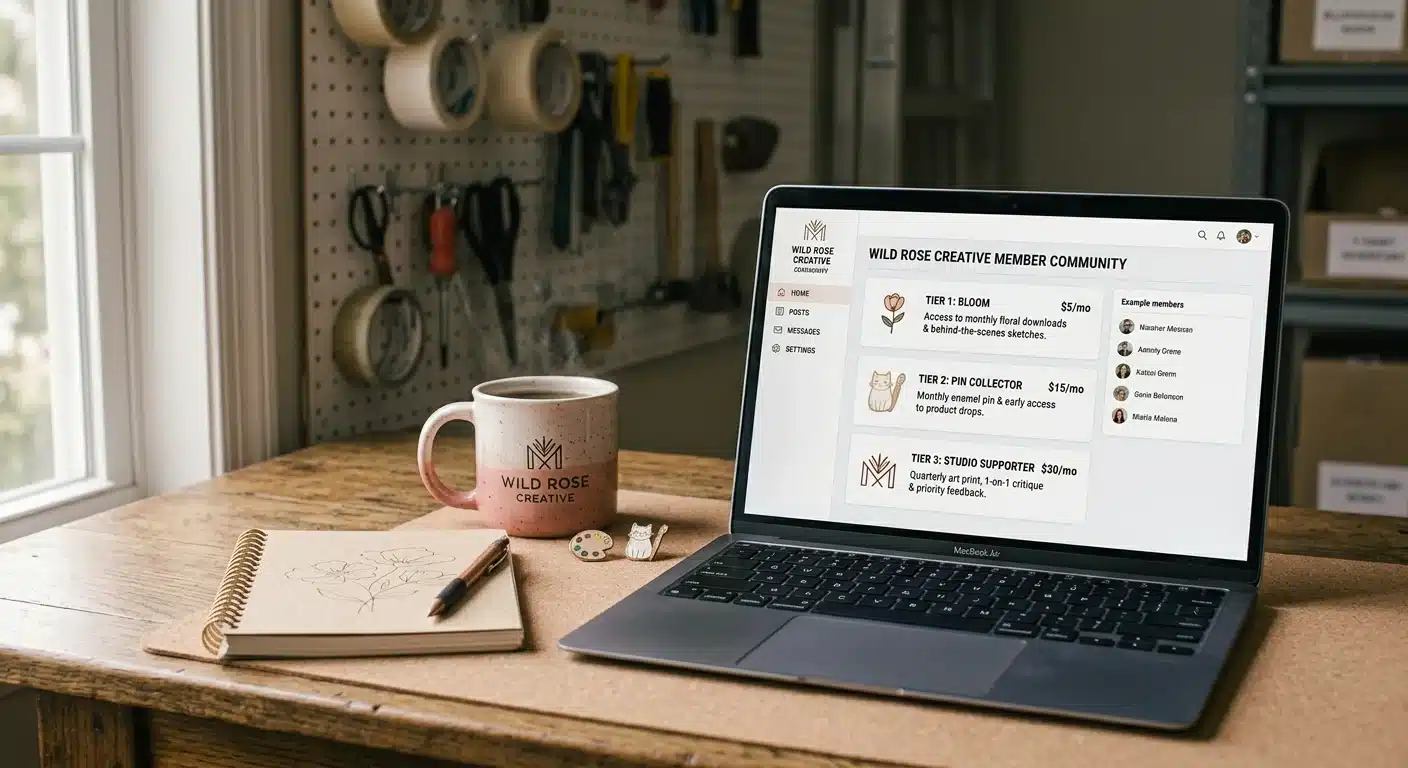
How the Tiers Usually Work
| Tier | Price Range | Typical Perks |
|---|---|---|
| Low tier | $2 to $5/month | Wallpapers, early access to posts, community access |
| Mid tier | $8 to $12/month | Behind-the-scenes process videos, printable art |
| High tier | $15+/month | Physical rewards like stickers, pins, or mailed prints |
Good to know: At an average of $8 per patron, 100 patrons generate about $800 in monthly gross revenue — not $800 in take-home pay. Fees, taxes, and the cost of fulfilling physical rewards all come out of that number before it’s really yours.
The trick is to promise perks you can deliver every month without creating a second job for yourself. A consistent publishing schedule also gives members a clear reason to stay subscribed. Just don’t expect 100 patrons in your first month. Post consistently, deliver on what you promise, and treat your existing supporters like gold, because they’re the ones who tell their friends about you.
Section takeaway: Memberships create the only truly recurring income stream on this list. Start small and deliver consistently.
7. Print-on-Demand and Licensing
Best for: Artists who want lower-maintenance income from existing art. Typical range: $100 to $1,000+ a month.
If running a full shop with inventory sounds exhausting, print-on-demand services let you upload your art once and let a third party handle printing, shipping, and customer service. You earn a cut of every sale without the manufacturing hassle.
This is often called passive income, but that’s not quite accurate. It’s more like lower-maintenance income. The work doesn’t disappear. You’ve just moved more of it upfront into creating designs, maintaining listings, and marketing them.
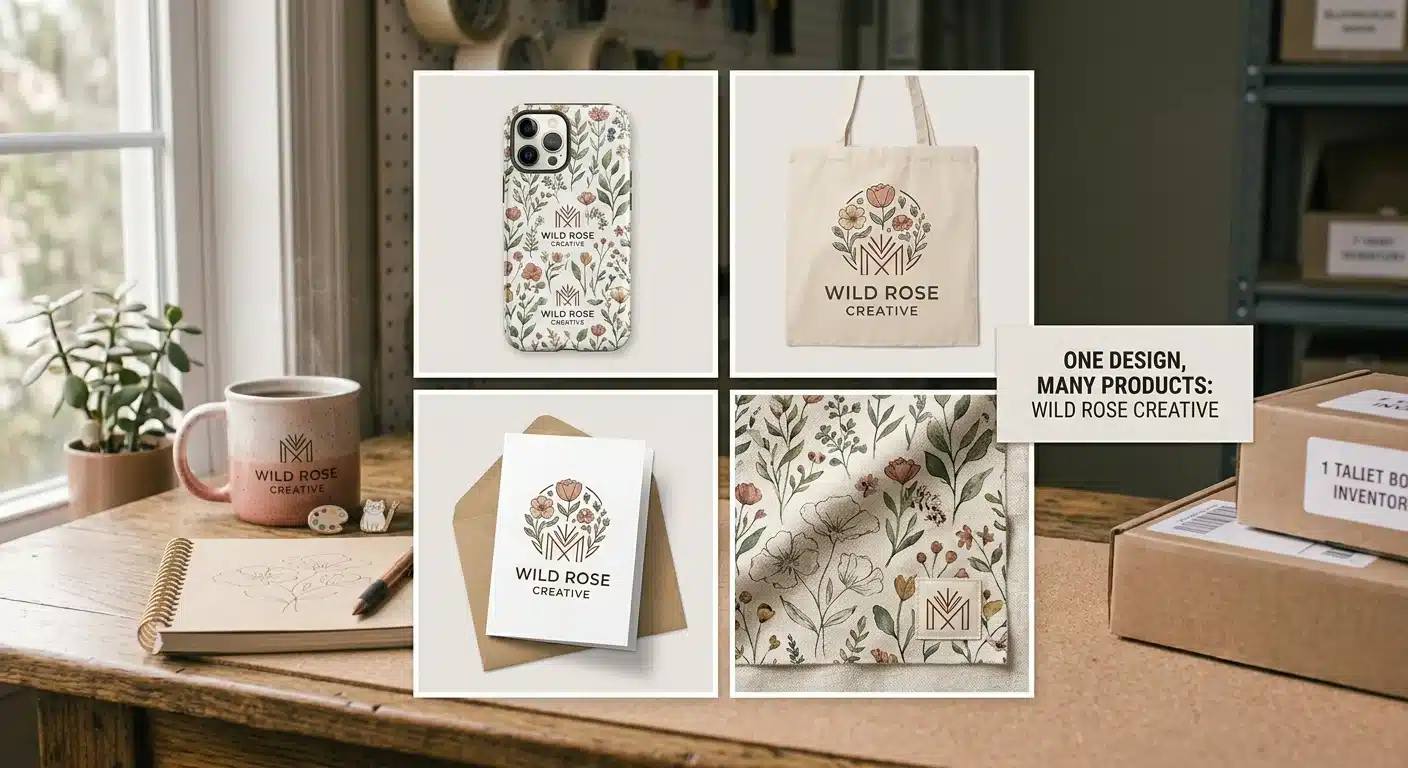
Print-on-Demand vs. Licensing
| Factor | Print-on-Demand | Licensing |
|---|---|---|
| How it works | Upload art; a third party prints and ships per order | Grant a company permission to use your art on their products |
| Revenue model | Per-sale margin after production costs | Royalty percentage on each unit sold |
| Effort level | Design + listing creation upfront | Negotiation + contract review upfront |
| Product types | T-shirts, mugs, phone cases, totes | Greeting cards, fabric, home decor, packaging |
| Key risk | Low margins if pricing isn’t strategic | Signing away too many rights |
Important: Before you sign any licensing agreement, check exactly what rights you’re granting, where and for how long the company can use the art, whether the license is exclusive, and how and when royalties are paid.
Section takeaway: Print-on-demand and licensing both turn existing art into ongoing revenue. POD is easier to start; licensing can scale further.
8. Teaching and Workshops
Best for: Artists who enjoy explaining their process. Typical range: $200 to $800+ per session.
If you enjoy explaining your process as much as doing it, teaching can become a real income stream. If you’re thinking about building a blog alongside your classes, our guide on how to make money blogging for beginners can help you get started.
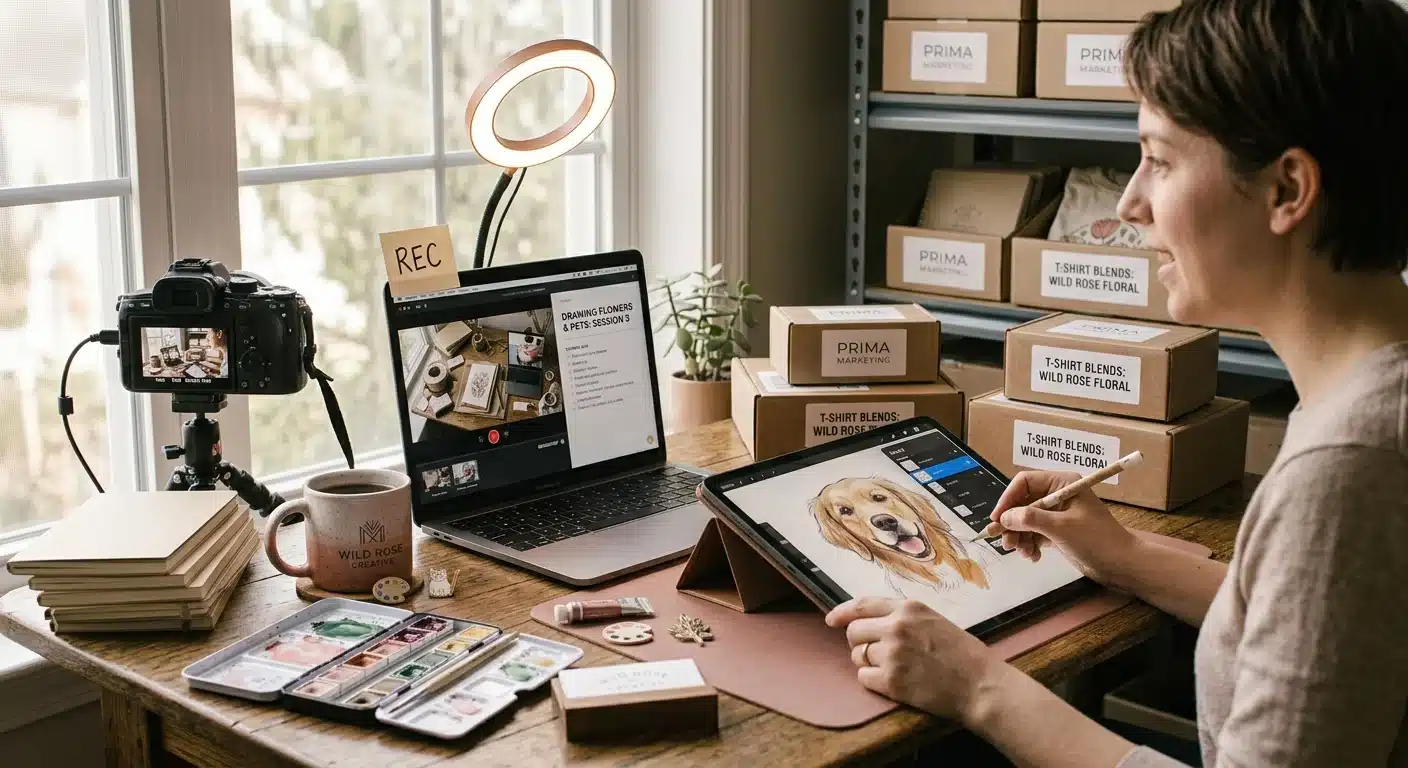
Teaching Formats to Consider
- Paid online classes — through a teaching platform or your own website
- Downloadable tutorials or PDF guides — create once, sell repeatedly
- Live workshops — either in person at a local studio or virtually over Zoom
Live Workshops vs. Recorded Classes
| Factor | Live Workshops | Recorded Classes |
|---|---|---|
| Revenue model | Time for money, one session at a time | Sell the same content repeatedly |
| Setup effort | Lower upfront, higher per session | Higher upfront, lower per sale |
| Scalability | Limited by your schedule | Sells while you sleep |
| Best for | Artists who need cash sooner | Artists building scalable income over time |
Teaching can also feed your other income streams by building trust, since students who value your process are more likely to buy your products, join your membership, or commission you.
Section takeaway: Teaching turns your expertise into income and trust. Choose live for faster cash, recorded for scalable revenue.
What It Actually Costs to Run an Art Business
Making money as an artist isn’t free. This is a starter list, not the full picture, but it covers the costs that trip people up most.

- Software — Adobe Creative Cloud pricing varies by plan and region, while Procreate is a one-time purchase on supported Apple devices. Check current pricing before budgeting.
- Platform and payment fees — Shopify subscription pricing varies by plan and billing cycle. Etsy and payment processors also take fees from sales.
- Marketplace and advertising costs — boosted posts, paid ads, and marketplace listing fees add up if you use them.
- Supplies and inventory — packaging and shipping for physical membership rewards can become a significant monthly expense, while wholesale and product-based streams require inventory before it sells.
- Taxes and insurance — set aside money from every sale for taxes. Review the self-employment tax basics so you’re not surprised at filing time. As your revenue and exposure grow, consider appropriate business insurance for your location and activities.
Your time counts as a cost too. If a product takes two hours to make and leaves only $5 after materials, fees, and other expenses, the price may be too low to support the business.
The number that matters most is what you keep after the real cost of making and selling the work, not just the revenue that comes in.
Section takeaway: Track every cost from the start. The gap between revenue and profit is where most art businesses quietly bleed money.
Managing the Business Side Without Losing Your Mind
Running an art business means wearing a lot of hats, and that can get overwhelming fast. A few habits make a real difference.

The three-bucket system
- Making — the creative work itself
- Selling — marketing, listing, pitching, and customer interaction
- Administration — invoicing, bookkeeping, emails, and logistics
Each week, decide which tasks are most likely to move revenue forward, and protect time for those before anything else. Tools like Notion can help you track orders, deadlines, and finances in one place. Set aside specific hours for admin tasks like invoicing and messages so they don’t eat into every hour of your day.
Once a month, review each income stream honestly. Track revenue, expenses, hours, and stress. Keep the ones that are both profitable and sustainable, and change or drop the ones that aren’t.
Remember: you’re not a machine. Building a sustainable art business is a marathon, not a sprint, and protecting your mental health matters more than hitting every deadline perfectly.
Whether art becomes your full-time career or stays a well-paid side hustle, the goal is the same. Do the work that makes you happy, and build a business around it that pays you fairly.
Final Thoughts
Start with the stream that matches your situation. Commissions work for immediate cash, memberships or sponsorships work for an existing audience, products work for proven designs, and teaching works if people already want to learn from you.
Your next-step checklist
- Pick one income stream that matches your situation today.
- Set it up this week — even a rough first version counts.
- Get it stable before adding a second stream.
- Over time, build a small mix that earns without depending on one platform, one client, or one lucky break.
Build one stream, get it stable, then add the next. That’s how your art becomes a business that pays you fairly.
More Ways to Make Money Creatively
If building an art business got you thinking about other income ideas, here are a few guides worth reading next.
- Learn 15 ways people actually make money with Canva.
- Discover the best-selling digital products on Etsy in 2026.
- Explore faceless business ideas that work for busy moms.
- Browse our full list of passive income ideas that actually work in 2026.
- Discover realistic passive income ideas for women.
- Learn how to make money with graphic design.
- Read our guide on how to make money blogging for beginners.
- 15 six-figure business ideas you’ll actually want to try.
Enjoyed this guide? Subscribe for our free weekly side hustle roundup → New creative income ideas, Etsy strategies, and tools for artists, straight to your inbox.