
College is expensive — and for most students, the gap between what you have and what you need shows up fast.
Tuition, rent, groceries, going out — it adds up before you’ve even bought textbooks. Here are 23 legitimate side hustles students actually use to earn real money — most you can start this week with just a phone and a few hours. Whether you need fast cash or long-term upside, there’s a fit here.
Some fit between classes. Others on weekends. A few can grow into something bigger after graduation — whether you need fast cash or long-term upside, there’s a fit.
Pick one that fits your schedule — and take the first step before you close this page.
Jump to any section:
On Campus & Academic:
Tutoring ·
Edit Papers & Résumés ·
Proctor Tests ·
Substitute Teaching
Freelance & Digital:
Freelancing ·
Stock Photos ·
Etsy Shop ·
Printables
Gig Economy & Delivery:
Uber/Lyft ·
Food Delivery ·
TaskRabbit
Services Around Campus:
Pet Sitting ·
Babysitting ·
Housesitting ·
Cleaning ·
Lawn Care ·
Snow Shoveling ·
Moving Help ·
Junk Hauling
Skills-Based:
Photography ·
Music/Sports Lessons ·
Lifeguard ·
Performing

On Campus & Academic
You’re already on campus, studying, surrounded by students who need help. These side hustles turn what you know into cash — without leaving school grounds.
1. Tutor Classmates

If you’re strong in any subject, someone near you is struggling with it. Use platforms like Wyzant or Tutor.com, or post flyers around campus and charge $20–$50/hour. No formal teaching experience needed — just subject knowledge and patience.
Email your department or check the student job portal. Do it today.
Best platforms to start:
- Wyzant — set your own rates, get matched with local students
- Tutor.com — no degree required for most subjects
- Campus flyers — fastest way to land your first client for free
💰 What it pays: $20–$50/hour. Test prep tutoring — SAT, ACT, GRE — pays even more. One of the highest hourly rates available to beginners.
Already helping classmates with writing? The next option turns that into a paid service too.
2. Edit Papers & Write Cover Letters/Résumés
Every college student writes papers, applications, and résumés — most need help. Charge $15–$30 per paper edit or $50–$100 per résumé. One satisfied client can turn into 3–5 referrals within a week.
Post in your campus Facebook group or student Slack channels to land your first client this week. Senior year is peak season — résumé requests spike hard in October and March.
What to offer:
- Essay and paper editing — $15–$30 per piece
- Résumé writing and formatting — $50–$100
- Cover letter writing — $30–$60
- LinkedIn profile optimization — $40–$75
💰 What it pays: $15–$100 per project depending on the service. Fully remote, zero overhead, and easy to scale through referrals.
3. Proctor Tests
Many universities and private testing centers pay students to supervise exams. It’s one of the easiest campus gigs available — you show up, make sure no one cheats, and get paid $12–$20/hour for sitting in a quiet room.
Check your university’s student employment board for openings — openings fill fast at the start of each semester. Many proctoring roles also allow you to study quietly during the exam, which makes this one of the most efficient uses of your time on this list.
💰 What it pays: $12–$20/hour. You’re essentially getting paid to sit in a quiet room — hard to beat as a campus side gig.
4. Become a Substitute Teacher
In some states, you can substitute with a bachelor’s degree in progress or a short certification — requirements vary, so check your state’s education department website. Sub pay runs $100–$200 per day depending on the district, and you choose which days you’re available.
A few shifts a month can cover rent. And unlike most gigs on this list, substitute teaching looks genuinely impressive on a résumé — especially if you’re studying education, psychology, or communications.
Heads up: Requirements vary significantly by state. Some require a background check and a short orientation. Check your state’s department of education website before applying.
💰 What it pays: $100–$200/day. Three sub days a month is $300–$600 — enough to cover most students’ rent contribution.
Freelance & Digital
If you’d rather work online and skip commuting entirely, start here. These side hustles live on your laptop — and carry the highest long-term earning potential on this list.
5. Freelance Writing, Design or Editing
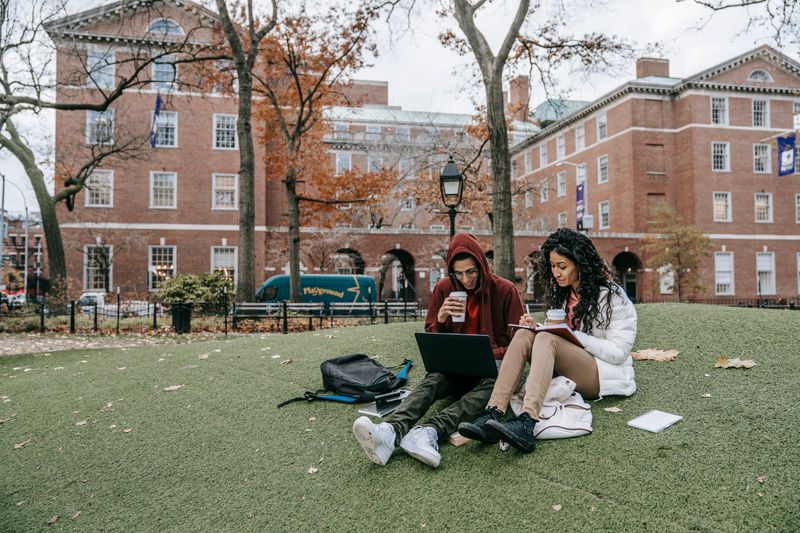
Businesses, blogs, and brands always need content, graphics, and polished copy — and they pay for it. Create a profile on Fiverr or Upwork. Then niche down fast. Don’t be “a writer” — be “a résumé writer for college seniors” or “a product description writer for Etsy sellers.”
Beginners earn $15–$50 per project, experienced freelancers charge $100–$300+. The skills you build here — writing, design, communication — translate directly into higher-paying full-time roles after graduation.
Best niches for college students:
- Résumé and cover letter writing for fellow students
- Blog post writing for small businesses
- Canva graphic design for social media
- Proofreading and copy editing for online publications
💰 What it pays: $15–$50/project as a beginner, $100–$300+ once you build a portfolio. One of the highest-ceiling side hustles on this list.
If you like creating things but prefer visuals over words, the next option might be more your speed.
6. Sell Stock Photos
If you’ve got a decent camera or smartphone and an eye for composition, stock photography pays passively. It’s competitive — but niche, authentic campus photos still sell. Upload lifestyle, campus life, and everyday moments to Shutterstock or Adobe Stock.
The same photo can sell dozens of times over years. Each download earns $0.25–$5 — and your library keeps growing every time you upload a new batch.
Campus photos that sell well:
- Students studying in libraries and coffee shops
- Campus architecture and outdoor spaces
- Diverse groups of people collaborating
- Laptop and workspace flat lays
💰 What it pays: $0.25–$5 per download. Slow to start — but a library of 200+ photos can earn $200–$500/month passively.
7. Start an Etsy Shop

Etsy is a marketplace for handmade goods, vintage items, and digital products. College students sell everything from custom stickers and dorm décor to digital planners and study guides. Some shops earn $500–$2,000/month once they gain traction — but expect a ramp-up period before the sales roll in.
The key advantage — Etsy brings buyers to you through its own search. You don’t need a social following or a marketing budget to make your first sale.
What college students sell successfully:
- Custom stickers and dorm wall art
- Digital study guides and notes
- Handmade jewelry and accessories
- Canva templates and social media graphics
💰 What it pays: $50–$2,000+/month depending on your shop and niche. Digital products are the highest-margin option — no materials, no shipping.
8. Sell Printables
Unlike physical Etsy products, printables require zero inventory — design once and sell the same file hundreds of times. Study guides, budget trackers, and planner templates sell consistently on Etsy. Use Canva to design them, drive traffic through Pinterest, and earn passively while you’re in class.
A well-designed study guide bundle can sell hundreds of times from a single afternoon of work. That’s the real appeal — your time investment is capped, but your earning potential isn’t.
Printables that sell well for college creators:
- Semester and weekly study planners
- Budget trackers for college students
- Exam prep checklists and note templates
- Dorm room décor printables
💰 What it pays: $50–$1,000+/month once your shop builds traction. One of the most passive income options available to students with basic design skills.
Gig Economy & Delivery
Sign up. Get approved. Start earning. No résumé. No interview. No boss. The tradeoff — inconsistent demand and wear-and-tear if you’re driving — but for fast cash, nothing beats these.
10. Deliver Food with DoorDash or Uber Eats
No car? No problem — many platforms accept cyclists and scooter riders in dense college towns. Deliver between classes or on weekend evenings and earn $15–$25/hour including tips. Peak hours around campus dining and late-night cravings are especially lucrative.
This is one of the fastest side hustles to activate — sign up, get approved, and you can be earning within 48 hours. No interview, no waiting, no commitment.
💰 What it pays: $15–$25/hour including tips. Dinner rushes and late-night orders near campus are the most lucrative windows.
11. Pick Up Micro-Jobs on TaskRabbit
TaskRabbit connects you with people who need help with one-off tasks. One day you’re assembling IKEA furniture, the next you’re helping someone move a couch. You set your own rates and availability — most Taskers earn $20–$40/hour, and strong reviews build a steady stream of repeat clients fast.
This works well as a bridge income — something you can pick up and put down without commitment. Accept jobs on weekends or between exams and let reviews do the marketing for you over time.
💰 What it pays: $20–$40/hour. Flexible, no long-term commitment, and the variety keeps it from feeling repetitive.
Services Around Campus
Your campus neighborhood is full of busy professionals and families who need reliable help. These side hustles require no special skills — just reliability and solid work. And as a student, you’re often seen as more trustworthy than a random contractor.
12. Pet Sitting & Dog Walking

Apps like Rover and Wag connect you with local pet owners who need reliable care. Dog walks pay $15–$25 each, and overnight sitting brings in $50–$75 per night. Build a base of five regular clients and you’ve got a reliable $500–$1,000/month income stream.
These apps include reviews, insurance, and profile verification — which handles the trust barrier for you. Set competitive rates to land your first few reviews fast, then raise them once you have five stars.
💰 What it pays: $15–$25/walk, $50–$75/night for sitting. Five regular walking clients = $300–$500/week on autopilot.
13. Babysitting & Kids Entertainment
Families near campus always need trustworthy sitters — and college students with a clean background check are in high demand. Charge $15–$20/hour for standard babysitting. If you’re creative and energetic, offer party entertainment for kids’ birthdays and charge $50–$150 per event.
Post on Care.com, Sittercity, or local neighborhood Facebook groups. Once a family trusts you, they book you repeatedly — and refer you to their friends without being asked.
💰 What it pays: $15–$20/hour for sitting, $50–$150/event for parties. Weekend evenings are the most in-demand time slots.
14. Housesitting
Homeowners who travel need someone reliable to watch their property, water plants, collect mail, and care for pets. Housesitting pays $25–$50/night — and you often get a free place to stay while you do it. Post on Rover, TrustedHousesitters, or local Facebook groups to find your first client this week.
For students, this has a hidden bonus — free accommodation while you sit means you save on rent for those nights too. Summer and holiday breaks are peak season when homeowners travel most.
💰 What it pays: $25–$50/night plus free accommodation. A long weekend sit can earn $100–$200 while saving you your own housing costs.
15. Clean Houses or Offices
Cleaning pays more than most people expect — $20–$30/hour is standard, and clients tip well for reliable work. Start with one or two clients through word of mouth or Nextdoor. Build a reputation for showing up and doing a thorough job, and referrals follow quickly.
A three-hour cleaning job at $25/hour pays $75 — more than most campus part-time shifts. And recurring weekly clients mean predictable income you can count on every month.
💰 What it pays: $20–$30/hour. Four recurring weekly clients = $400–$600/month working roughly 8 hours per week.
16. Lawn & Gardening Services
Spring and summer create consistent demand for mowing, weeding, and basic landscaping around campus neighborhoods. Charge $30–$60 per lawn depending on size. Knock on a few doors in a residential street near campus and you can fill your weekend calendar in an afternoon.
Most homeowners want the same person back every week — which means once you land five clients, you’ve built a reliable Saturday income that runs itself all season.
💰 What it pays: $30–$60 per lawn, $150–$300/Saturday with a full route of five clients. Consistent, predictable, and zero competition for reliable workers.
17. Shovel Snow
If you’re in a cold-climate college town, one good snowstorm is worth hundreds of dollars. Charge $20–$50 per driveway, knock on doors the night before a storm hits, and line up a full route before morning. Early risers who show up reliably become the go-to person on the block every winter.
The hustle here is positioning — reach out to neighbors before the storm, not after. The student who knocks first gets the route. The rest find someone else.
💰 What it pays: $20–$50/driveway. A route of 10 driveways after one snowstorm = $200–$500 in a single morning.
18. Help People Move
Moving is physically demanding work most people happily pay to outsource. Charge $25–$40/hour and list your services on Facebook Marketplace, Craigslist, or TaskRabbit. College towns are goldmines — students move in and out every semester, and demand spikes hard at the start and end of each academic year.
Team up with one or two friends and split a higher rate — most people pay $150–$300 for a half-day move and are happy to pay more for reliable, careful movers.
💰 What it pays: $25–$40/hour. A full moving day with a friend can earn $150–$300 each — and August and January are peak months near any campus.
19. Haul Junk
People pay to have unwanted stuff removed — furniture, appliances, yard waste, old electronics. No truck? Partner with a friend or rent one short-term — you can still make solid profit margins. Post on Facebook Marketplace or Nextdoor offering junk removal for $50–$200 per haul.
Demand is consistent and the work is straightforward. End-of-semester move-outs near campus are an especially rich source of paying jobs — students and landlords both need things cleared fast.
💰 What it pays: $50–$200 per haul. A busy weekend near campus move-out can bring in $300–$500 in two days of work.
Skills-Based
These side hustles pay the most per hour — because you’re bringing a specific talent to the table. You don’t need to be a pro — just better than your client.
20. Start a Photography Business

Events, portraits, headshots, and campus life are all in demand around a college campus. Offer discounted shoots to friends first to build your first 5 portfolio pieces — then charge full rates. Charge $100–$300 for a portrait session and $500–$1,500 for events.
Build a simple portfolio on Instagram and post in local Facebook groups to land your first paying booking. Greeks, sports teams, and senior portrait season are your three biggest recurring revenue opportunities on campus.
💰 What it pays: $100–$300 per portrait session, $500–$1,500 for events. One wedding photography gig can pay more than a month of part-time campus work.
21. Teach Music or Sports Lessons
If you play an instrument or excel at a sport, parents in your area will pay for private lessons for their kids. Charge $30–$60/hour for music lessons, $25–$50/hour for sports coaching. Post flyers at local schools, community centers, and on Nextdoor to find your first students this week.
Once you land one student, their parents talk. A single satisfied family can send you three more referrals within a month — and kids stick with good instructors for years, not weeks.
💰 What it pays: $30–$60/hour for music, $25–$50/hour for sports. Six weekly students at $40/hour each = $240/week working six hours.
22. Work as a Lifeguard
Pools, beaches, and recreation centers hire lifeguards year-round — and college students are their most reliable candidates. Most states offer certification courses for under $200 that take a weekend to complete. Lifeguards earn $15–$20/hour, and many positions offer flexible scheduling around class times.
Campus recreation centers often hire student lifeguards specifically — which means a short walk to work and the flexibility to swap shifts with classmates. Check your university’s rec center first before applying anywhere else.
💰 What it pays: $15–$20/hour. Certification costs ~$150–$200 upfront but pays for itself within two shifts.
23. Perform on Campus or at Local Events
If you sing, play music, do magic, or have any kind of performance skill — put it to work. Campus events, local markets, and private parties all pay performers $50–$300 per gig. Busking in a busy campus area can also bring in $20–$50 in a single afternoon with zero booking required.
Build a short video reel of your performance and post it on Instagram or TikTok. Event organizers search for local talent online constantly — a single viral clip can fill your calendar for months.
💰 What it pays: $50–$300 per booked gig, $20–$50/afternoon busking. One consistent booking per week adds $200–$1,200/month to your income.
How to Pick Your First Side Hustle
Twenty-three options is too many — so here’s how to choose fast. Ask yourself one of these three questions:
💸 Need money this week?
Dog walking, food delivery, or TaskRabbit. All three pay within days with zero setup.
📈 Want long-term upside?
Freelancing, Etsy, or stock photos. Slower to start — but the skills and income follow you after graduation.
🎓 Want to use your skills?
Tutoring, editing papers, or teaching music or sports. You’re already skilled — charge for it.
Match the hustle to your situation:
| Side Hustle | Time to First $ | Monthly Earnings | Best For |
|---|---|---|---|
| Food Delivery | 48 hours | $300–$800 | Anyone — fastest start |
| Dog Walking | Same week | $500–$1,000 | Animal lovers |
| Tutoring | 1–2 weeks | $400–$1,500 | Strong in any subject |
| Freelancing | Days–1 week | $300–$2,000+ | Writers, designers, editors |
| Etsy / Printables | 2–4 weeks | $50–$2,000+ | Creative students |
| TaskRabbit | Same week | $200–$800 | Hands-on, flexible workers |
| Photography | 2–4 weeks | $300–$2,000+ | Visual creatives |
One running hustle beats five ideas sitting in your notes app. Clarity comes from action — not more options. The best side hustle isn’t the highest paying — it’s the one you’ll actually stick with next week.
3 Easiest Side Hustles to Start This Week
These three require zero setup and pay within days — no portfolio, no waiting.
Option 1 — Dog Walking
Create a free Rover profile today. Set competitive rates and you could have your first booking by the weekend.
Option 2 — Food Delivery
Sign up for DoorDash or Uber Eats and start earning within 48 hours. No interview, no waiting, no commitment.
Option 3 — Tutoring
Post a flyer on campus or create a profile on Wyzant this afternoon. Your first client could reach out today.
Want step-by-step guides for any of these? I break them down here.
The Bottom Line
There you have it — 23 real side hustles built around a college schedule.
A week from now, you could still be stressed about money. Or you could have your first $100 earned. Some of these pay immediately. Some take a few weeks to build. A few could turn into a real income stream by the time you graduate.
Start messy. Start small. Just start today.
Did I miss a good one? Drop it in the comments and I’ll add it to the list.
FAQs
What is the best side hustle for a college student with no experience?
Dog walking, food delivery, and babysitting require zero experience and can start paying within days. For something with more long-term potential, freelance writing or tutoring are strong starting points that build real skills alongside the income.
How much can a college student realistically earn from a side hustle?
Many college students earn $200–$500/month from a single side hustle. Stack two or three and $1,000–$2,000/month is realistic without sacrificing your grades.
What side hustles work best around a class schedule?
Freelancing, tutoring, and digital income streams like Etsy and stock photos are the most schedule-friendly — you work when you have time and pause when exams hit.
Do I need a car for college side hustles?
No. Many of the best options — tutoring, freelancing, Etsy, pet sitting, babysitting — require nothing more than a smartphone and a willingness to show up. A car helps for delivery and rideshare but isn’t essential.
Can a side hustle hurt my grades?
It can if you overcommit. Start with one hustle and limit yourself to 10 hours a week. Most students find that earning their own money actually motivates them to stay on top of their studies.
What if I don’t have time?
If you have 30–60 minutes between classes, you have enough. Dog walking takes an hour. A tutoring session is 45 minutes. Food delivery works in two-hour windows. You don’t need a wide-open schedule — you need to start.
You Might Also Love
→ 11 Real Ways to Earn Money Without a Traditional Job
→ 29 Small Business Ideas That Actually Make Money
→ Get Paid to Walk: 19 Creative Ways to Make $1,000 a Month